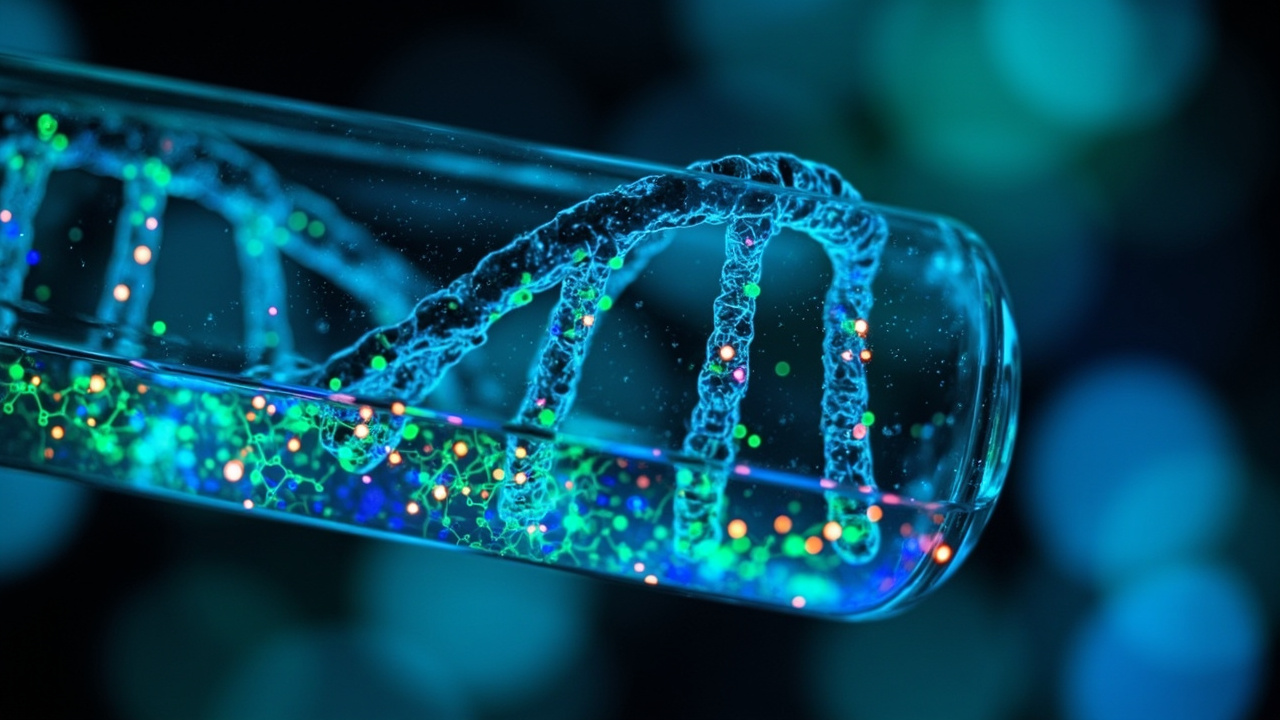
Researchers at the Wyss Institute at Harvard University have published a drug discovery platform that uses programmable DNA nanoswitches to screen hundreds of millions of chemical compounds simultaneously — a capability that conventional one-at-a-time screening cannot match. The platform, called FIND (Functional Interaction-based Nanoswitch Discovery), was described in a paper published November 5, 2026, in Science, and it has already yielded drug leads targeting a diabetes-linked receptor and a tool for studying the SARS-CoV-2 spike protein.
What FIND Is and Why It Matters
Most drug discovery pipelines test whether a candidate molecule binds to a single target protein. That binary question — does it stick or not? — misses a large category of therapeutically important biology: the interactions between proteins. Many diseases hinge on whether two proteins connect, disconnect, or misfire in their communication. Drugs that nudge those interactions are hard to find with conventional assays because traditional screens are not built to measure them at scale.
FIND flips the question. Rather than asking only about binding, it asks whether a candidate molecule changes the functional relationship between a pair of proteins. According to the Wyss Institute's published account of the work, lead researcher Wesley Wong described the core idea this way: the team wanted to "build each experiment onto a single DNA molecule, so that many experiments could run in parallel in one tube." That architecture is what makes the throughput possible.
How DNA Nanoswitches Work
The mechanical heart of FIND is the DNA nanoswitch — a short, engineered strand of DNA that physically changes shape depending on what happens around it. In the resting state, the strand is linear. When a candidate drug promotes an interaction between two proteins that have been tethered to the strand, the DNA loops closed. That loop is not just a visual cue; it is a data point.
Looped and linear nanoswitches travel at different speeds through a gel during electrophoresis, so researchers can separate "interaction promoted" from "interaction not promoted" across millions of compounds in a single experiment. When the team couples this readout to next-generation sequencing, they can decode which DNA-encoded small molecule caused which result across a library of hundreds of millions of candidates, according to the research published in Science under the authorship of Hansen, Lipstein, and colleagues.
The DNA-encoded chemical library approach is not entirely new, but attaching the functional readout — the nanoswitch shape change — directly to the encoding molecule is the innovation FIND introduces. It transforms a binding assay into a functional assay without adding separate detection steps.
Screening 400 Million Compounds for a Diabetes Target
The first major proof of concept targeted PPAR-gamma, a nuclear receptor that regulates insulin sensitivity and fat storage. Drugs that activate PPAR-gamma are used to treat type 2 diabetes, and finding new activators or modulators could expand that therapeutic toolkit.
The FIND team began with a library containing 400 million DNA-encoded small molecules, according to the Wyss Institute's reporting on the research. The nanoswitches flagged several compounds that enhanced PPAR-gamma activation, and follow-up experiments showed that those compounds influenced lipid metabolism in cultured cells. That biological activity in cells — not just in a test tube — is a meaningful step toward validating a drug lead, because a molecule that works only in isolated biochemical conditions often fails when it encounters a living cell.
The 400-million-compound starting point illustrates the scale advantage. Running 400 million individual binding experiments by conventional high-throughput screening would require robotic liquid-handling systems working for weeks or months. The FIND approach compressed that search into a parallel reaction in a single tube, with sequencing providing the readout.
Identifying a Nanobody Against the SARS-CoV-2 Spike Protein
The second demonstration used FIND to screen for molecules that modulate the interaction between the SARS-CoV-2 spike protein and the human cell receptor it uses to gain entry. The team identified a nanobody — a small, single-domain antibody fragment — that altered that interaction, according to the Wyss Institute's account of the Hansen et al. paper.
Nanobodies are research tools as well as potential therapeutics; their small size makes them easier to engineer and manufacture than full antibodies. Finding one that specifically modulates a spike-receptor interaction validates FIND's ability to work with biologic molecules, not just small-molecule chemical libraries. It also demonstrates that the platform can target protein interactions relevant to infectious disease, expanding the range of problems it could address.
Why Protein-Protein Interactions Are Hard Targets
Protein-protein interactions have long been considered among the most difficult targets in drug discovery. The contact surfaces between two proteins are typically large and flat — sometimes called "undruggable" — because small molecules have trouble finding a groove or pocket to grip. Despite that reputation, researchers have found examples where small molecules can disrupt or stabilize protein contacts by binding at hotspot regions, and those examples have produced approved drugs.
FIND is specifically engineered for this problem. Because the nanoswitch reports on the functional outcome of an interaction — did the loop form? — rather than on binding alone, it can detect molecules that work at hotspots, at allosteric sites, or by any other mechanism that changes whether two proteins associate. That mechanistic agnosticism is an advantage when researchers do not know in advance where a productive drug might bind.
High-Throughput Screening Meets Functional Readout
Conventional high-throughput screening and functional assays have traditionally been separate stages in a drug discovery workflow: screen first for binders, then test the most promising ones functionally. FIND collapses those stages. The nanoswitch shape change is itself a functional measurement, and next-generation sequencing reads millions of those measurements at once, as described in the Hansen et al. paper published in Science.
That integration matters for cost and speed. Each stage of a traditional pipeline requires reagents, robotics, and time. Eliminating a stage reduces all three. For academic labs and smaller biotechnology groups that cannot afford industrial-scale screening infrastructure, a single-tube approach that delivers functional information could open up drug discovery targets that were previously accessible only to large pharmaceutical companies.
Broader Applications Under Exploration
The Wyss Institute's reporting on the research notes that the team is examining FIND's adaptability for additional therapeutic targets and pathogens beyond those covered in the initial publication. The PPAR-gamma and SARS-CoV-2 demonstrations were chosen in part to show range: one is an intracellular nuclear receptor, the other a viral surface protein. The fact that the platform performed in both settings suggests it is not narrowly optimized for one class of target.
Beyond infectious disease and metabolic disorders, the ability to screen for modulators of protein interactions could have implications for oncology, where many tumor-driving proteins operate through aberrant protein partnerships. Autoimmune conditions, where immune signaling complexes misfire, represent another broad area where interaction-modulating drugs could be valuable.
What the Publication Establishes
The November 5, 2026, Science paper by Hansen, Lipstein, and colleagues, together with the Wyss Institute's detailed reporting on the work, establishes three concrete outcomes: a described and reproducible method, a validated large-scale screening result against PPAR-gamma, and a successful nanobody identification against a SARS-CoV-2 target. Those are documented engineering and research results, not projections. The platform exists, has been tested, and has produced hits that showed activity in cell-based follow-up experiments. That combination — method, scale, and cellular validation — is what sets FIND apart from earlier proof-of-concept demonstrations of DNA nanotechnology in drug screening.
Sources referenced
- FINDing new drug leads faster with DNA nanotechnology (https://wyss.harvard.edu/news/finding-new-drug-leads-faster-with-dna-nanotechnology/)
- Discovering molecular modulators with nanoswitch screening (https://www.science.org/doi/10.1126/science.adt7185)