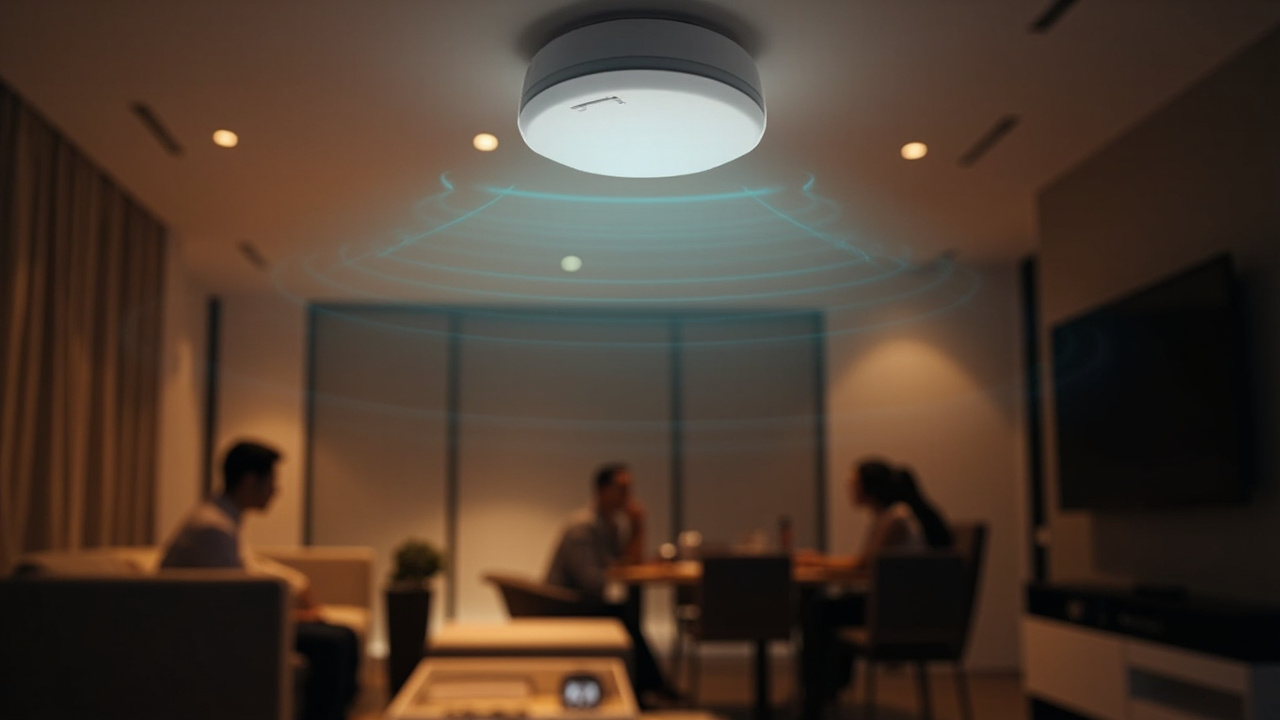
TL;DR: Aqara released its Spatial Multi-Sensor FP400 worldwide on September 16, 2026, offering camera-free 60GHz radar tracking for up to 10 people, eight automation zones, and Matter-over-Thread plus Zigbee support for $79.99.
Aqara puts spatial sensing on sale worldwide
Aqara announced global availability of the Spatial Multi-Sensor FP400 in a New York-dated statement on September 16, 2026, according to Aqara Announces the Availability of The Spatial Multi-Sensor FP400.
The company described the product as a spatial intelligence sensor for homes that is designed to understand occupancy, movement and context rather than only reporting basic motion or presence.
Coverage in the Aqara announcement positions the launch as worldwide. The company said shoppers can purchase through its official website, authorized retailers and major e-commerce platforms such as Amazon in Belgium, Canada, France, Germany, Italy, Ireland, Netherlands, Poland, Spain, the UK and the US.
The Aqara Forum added regional detail, stating that the FP400 is available now in global markets excluding RU and JP, with ordering links for the US, EU and UK Aqara Shops.
The Verge reported the same global availability on September 16, 2026, in a post by Thomas Ricker titled Aqara’s do-it-all FP400 presence sensor is now available globally.
According to The Verge, the US price is $79.99. That price point places a multi-person radar tracker, fall detector, people counter and light sensor in a single package aimed at residential smart-home users.
Aqara said the lineup includes two versions to address different user needs: the Spatial Multi-Sensor FP400 for advanced residential smart-home automation, and the Spatial Multi-Sensor FP400 Pro for assisted living and specialized elder-care solutions.
What the FP400 actually senses
At the core of the FP400 is a next-generation high-precision 60GHz mmWave radar, according to the Aqara announcement.
Aqara said the radar delivers multi-person sensing, precise real-time tracking and occupant counting for up to 10 people simultaneously. Combined with Aqara's AI Spatial Learning software, the company said the device provides a foundation for advanced spatial intelligence.
The Verge summarized the same capability as real-time occupant tracking using mmWave radar. According to The Verge, the sensor knows if occupants are standing, sitting or lying down.
The Verge also reported that the device can detect falls and count the number of occupants, along with how long they have remained in an area and the distance they have traveled.
That combination moves beyond conventional motion sensors, which generally report only whether movement occurred. The FP400 is intended to help a home understand who is where, how many people are present and how they move through a space.
Aqara framed that distinction as a move from simply detecting motion or presence to enabling homes to better understand occupancy, movement and context for more granular and personalized automations and insight.
According to Matter Alpha in Aqara takes FP400 global with Matter, Thread and 10-person tracking, the FP400 is effectively a Matter-era upgrade to the concept behind Aqara's FP2. Matter Alpha reported that the earlier FP2 brought 60GHz radar, multi-person detection and zone positioning to global users in 2023, while the later FP1E offered a simpler Zigbee alternative.
Matter Alpha also noted that the battery-powered FP300 expanded the approach by combining 60GHz radar with PIR, temperature, humidity and light sensing. The FP400 pushes further toward detailed spatial tracking rather than general environmental sensing.
One sensor for a large room
Aqara said one FP400 can cover a space up to 10m x 8m or approximately 860 sq ft with a wide 120-degree field of view.
Matter Alpha reported the same coverage figures, describing tracking across an area up to 10 by 8 meters, around 860 square feet, with a 120-degree field of view.
That scale means a single ceiling-mounted unit can oversee a combined living and dining area, a large bedroom, an open office or a small retail-style space without requiring multiple motion detectors.
Users can also define up to 8 zones for localized automation, according to the Aqara announcement. Matter Alpha likewise reported that users can split the space into as many as eight zones for automations based on where people are and how they move between different parts of a room.
Aqara gave the example of ambient lights turning on and off based on movement from the couch to the dining room table, all with just one device.
In practical terms, that zone model allows different actions in different corners of the same room. A reading chair zone could keep a lamp on while a doorway zone turns off hallway lighting, even though both areas are monitored by the same sensor.
The Aqara Forum announcement described the same idea as automations that know where occupants are, rather than only that someone is present. It listed multi-target tracking and advanced spatial sensing as the basis for precise, zone-based automations.
Broad coverage also reduces hardware clutter. Instead of placing separate sensors to cover a couch, table and entrance, a user can map sub-areas in software and assign separate behaviors to each.
Camera-free approach to privacy
Aqara emphasized that the FP400 is designed to bring precise spatial intelligence to homes without sacrificing the privacy typically compromised by smart cameras.
Because the system relies on radar reflections rather than images, it does not capture visual detail. The Aqara Forum stated that there are no visual privacy concerns because there is no camera, even while high-frequency radar and an upgraded AI algorithm deliver more precise detection.
The Verge described the same trade-off, calling the FP400 a more private alternative to cameras while still offering occupant tracking.
For households reluctant to place cameras in bedrooms, bathrooms or living rooms, radar offers a way to automate lighting, climate and presence-based scenes without recording video.
The privacy advantage also matters for shared spaces. An office or assisted-living setting can monitor presence, falls or occupancy levels without storing identifiable images.
Aqara said the combination of high-precision spatial sensing with AI-powered environmental understanding redefines how smart homes perceive and interact with living spaces.
AI filtering for pets, air and vacuums
Presence sensors can trigger false alarms when pets move, heating airflow shifts curtains, or a robot vacuum crosses a room. Aqara said its intelligent AI sensing algorithm improves reliability by reducing false triggers caused by environmental factors like pets, airflow and robotic vacuums.
Matter Alpha reported the same function, stating that Aqara uses its AI Spatial Learning software to map room boundaries and entrances and reduce false triggers from sources including pets, airflow and robot vacuums.
The Aqara Forum similarly said high-frequency radar and an upgraded AI algorithm deliver stronger interference resistance and steadier performance in real homes.
A built-in ambient light sensor also helps trigger smart-home scenes based on both human activity and lighting conditions, according to the Aqara announcement. Matter Alpha described that component as a built-in illuminance sensor that adds lighting conditions to automations.
The Verge report also framed fall detection, dwell time and travel distance as part of the on-device understanding, allowing automations to consider not only presence but duration and movement history.
AI-assisted mapping is intended to make setup less manual. Aqara said AI-assisted mapping automatically detects room boundaries and entrances to make setup effortless.
The Forum announcement listed flexible installation and broad coverage as a core feature, noting that adaptable mounting fits different room types and layouts while reducing blind spots.
Thread and Zigbee in one device
Connectivity is the largest architectural change compared with the FP2, according to both Aqara and Matter Alpha.
Aqara said the FP400 offers native support for both Thread and Zigbee connectivity. As a Matter-enabled device, it is intended to ensure interoperability across major smart-home ecosystems, including Alexa, Apple Home, Google Home, Home Assistant, Homey and SmartThings.
Matter Alpha reported that the FP2 uses 2.4GHz Wi-Fi and Bluetooth, while the FP400 adds native Thread and Zigbee, making it the clearest Matter upgrade yet to Aqara's higher-end spatial sensing line.
Matter Alpha also placed the change in a wider company shift, reporting that Aqara increasingly adds Thread alongside Zigbee rather than replacing Zigbee outright. It cited products including the FP300, Climate Sensor W100, H2 switches, newer lighting and heating controls as earlier examples of devices that can switch between Zigbee for deeper Aqara-specific functions and Thread for native Matter connectivity.
According to Matter Alpha, the FP400 follows the same model. In Zigbee mode, it connects through an Aqara hub and can then be exposed to Matter ecosystems through the hub's bridge. In Thread mode, it can join Matter platforms including Apple Home, Google Home, Alexa, Home Assistant, Homey and SmartThings directly through a compatible Matter controller.
Aqara included two technical footnotes on that interoperability. It said an Aqara hub is essential when users integrate the FP400 into third-party Matter-enabled platforms in Zigbee mode. It also said a pre-configured third-party Thread Border Router is necessary for certain configurations, and that availability may vary by device or platform.
The Aqara Forum said Zigbee and Matter over Thread support provide flexibility across ecosystems. It noted that a Matter controller and Thread Border Router supported by the target ecosystem are required.
No Aqara hub required for Thread setup
Aqara said the FP400 can be added and configured in the Aqara Home app without an Aqara hub by using an existing third-party Thread Border Router.
That detail matters for buyers who already own an Apple TV, HomePod, Google Nest device, SmartThings hub or Home Assistant Thread radio acting as a border router. They do not need to purchase Aqara's bridge hardware solely to configure spatial features.
Matter Alpha described hub-less configuration as a change in how Aqara handles its own app when a device runs over Thread. It reported that earlier Aqara Thread products could already connect directly to third-party Matter platforms without an Aqara hub, citing the Door and Window Sensor P2 as an example that launched with direct support for third-party Thread Border Routers.
Matter Alpha also reported that Aqara later positioned Hub M3 as a way to bring additional Aqara-specific configuration to Thread devices such as adjustable sensitivity.
According to Matter Alpha, the FP400 approach means native Matter no longer has to force a choice between a third-party ecosystem and Aqara Home simply because the user does not own an Aqara hub. That makes the dual-protocol model more useful for people building around Apple Home, Home Assistant or another Matter platform while still wanting Aqara's configuration interface.
There remains a limitation on third-party dashboards. Aqara said that when integrated with third-party platforms with Thread, the FP400 exposes only one overall presence sensor and one illuminance sensor. Matter Alpha highlighted the same restriction as a major limitation when using third-party platforms directly.
In other words, full zone-level detail, multi-person counts and advanced spatial features are richest inside Aqara Home, while Matter exposes a simplified presence and light reading to Alexa, Apple Home, Google Home and similar systems.
Installation options and power
Aqara said the FP400 can be installed on the ceiling, the wall or in the corner.
That flexibility lets users choose the vantage point that best covers the intended zones. Ceiling mounting generally gives the clearest overhead view for tracking movement across zones, while wall or corner placement can aim coverage down a long room.
The Aqara Forum noted that USB-C power keeps the sensor running steadily over the long term. Continuous mains or USB power is important for radar sensors that perform constant scanning, unlike coin-cell motion detectors that wake only on movement.
Aqara said AI-assisted mapping automatically detects room boundaries and entrances. Automatic boundary detection can shorten the calibration step that previously required users to manually draw room shapes.
The company also linked mounting flexibility to fewer blind spots. By fitting different room types and layouts, a single device can cover more of a room than a narrow fixed-angle detector.
How it compares with FP2 and FP300
Matter Alpha traced Aqara's radar lineup from the FP2 in 2023 through the FP1E and FP300 to the FP400.
It reported that the FP2 brought 60GHz radar, multi-person detection and zone positioning to global users in 2023. The later FP1E offered a simpler Zigbee alternative, while the battery-powered FP300 combined 60GHz radar with PIR, temperature, humidity and light sensing.
The FP400 differs by emphasizing simultaneous tracking of up to 10 people, eight configurable zones and dual Thread-plus-Zigbee connectivity, according to Aqara and Matter Alpha.
The connectivity shift is the clearest break. Moving from 2.4GHz Wi-Fi and Bluetooth on the FP2 to Thread and Zigbee on the FP400 aligns the flagship spatial sensor with Matter-based smart homes and lower-power mesh networks.
Aqara explicitly contrasted the new model with its predecessor, stating that unlike the FP2, the sensor is designed for greater versatility through native Thread and Zigbee support.
For existing Aqara owners, the dual-protocol design preserves investment in Zigbee hubs while opening a path to Thread-based Matter setups without buying separate hardware variants.
What about the FP400 Pro
Aqara's announcement introduced the Spatial Multi-Sensor FP400 Pro for assisted living and specialized elder-care solutions, alongside the standard residential FP400.
However, global availability of the Pro model was not confirmed by September 19, 2026. Matter Alpha reported that Aqara told the publication there is currently no confirmed plan to make the FP400 Pro globally available.
The standard FP400 was previously released in China and is now available globally through Aqara's website, authorized retailers and Amazon, according to Matter Alpha and Aqara.
That distinction is important for buyers searching for the Pro name. As of the archive cutoff, only the standard FP400 had confirmed worldwide retail availability, while the Pro remained a separate assisted-living product without a global rollout commitment.
Why spatial presence matters for US smart homes
For US buyers, the FP400 arrives as Matter adoption widens and many homes already contain a Thread Border Router inside a smart speaker, TV box or hub.
Because the sensor exposes presence over Matter, it can trigger Alexa routines, Apple Home automations, Google Home scripts, Home Assistant automations, Homey flows and SmartThings routines without custom integrations, subject to the simplified one-presence-plus-illuminance exposure noted by Aqara.
Inside Aqara Home, the eight zones allow finer control, such as keeping kitchen task lighting bright while dimming a nearby lounge zone once it empties.
Fall detection, posture awareness and people counting add safety and energy use cases. The Verge noted detection of standing, sitting, lying down and falls, while Aqara highlighted occupant counting and real-time tracking.
Aqara describes itself as a global IoT company serving over 12 million users across five continents, with products spanning more than 30 categories and recognition including more than 300 industry accolades, according to its announcement.
The FP400 extends that portfolio from contact, climate and simple motion sensing into room-aware automation, where lights, heating and scenes respond to location within a room rather than to a whole-room trigger.
Sources referenced
- Aqara’s do-it-all FP400 presence sensor is now available globally. | The Verge (https://www.theverge.com/tech/996132/aqaras-do-it-all-fp400-presence-sensor-now-available-globally)