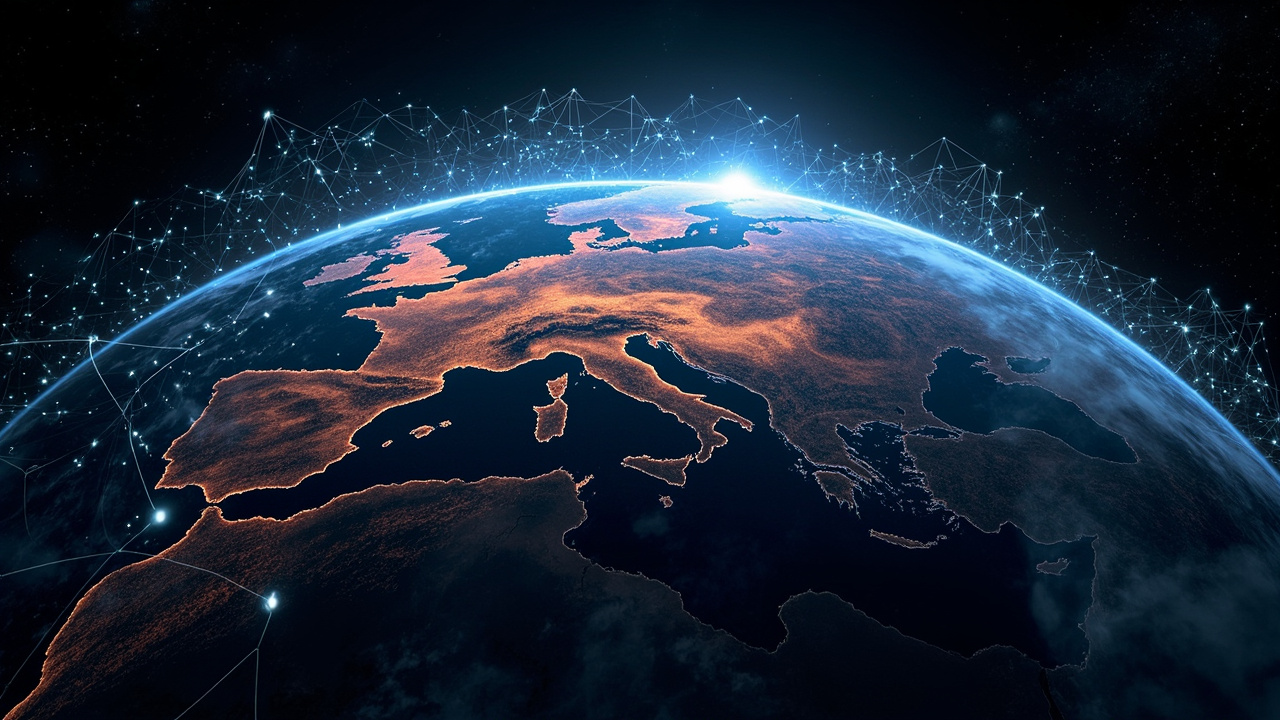
TL;DR: Google DeepMind and Google Research introduced WeatherNext 3 on September 3, 2026, an AI weather model that issues hourly global forecasts using live geostationary satellite data at up to 5-kilometer resolution.
What Google released and when
Google DeepMind and Google Research introduced WeatherNext 3 on September 3, 2026, according to the Google announcement titled Introducing WeatherNext 3: Our most advanced global weather AI model. The announcement described the system as the flagship AI weather forecasting model with real-time satellite data, hourly refreshes, higher resolution, precipitation forecasting, and clean energy variables. The same announcement said the model was integrated across Search, Gemini, Maps, Google Maps Platform, and Cloud.
Scientists at the two Google organizations released the model that day to feed weather information into search, Maps, and Gemini and to make it available on cloud platforms, according to the TechCrunch article titled Google's latest AI weather model gives you no excuse to forget your umbrella. A Google senior staff engineer, Samier Merchant, told TechCrunch that core variables would feed and power many Google products for the first time. The Ars Technica article titled Update to Google’s AI weather model improves forecast accuracy reported the release on September 8, 2026, and said the update was detailed in a white paper.
The release followed independent live testing during August 2026 on Operational WeatherBench, according to the Brightband post titled WeatherNext 3 on Operational WeatherBench. That post, dated September 2, 2026, identified Operational WeatherBench as Brightband's real-time comparison of leading AI and physics-based global medium-term forecast models. It described WeatherNext 3 as the new leader on that comparison.
Why hourly updates matter
WeatherNext 3 generates a new forecast every hour, rather than every six hours like traditional global models, according to the arXiv paper titled WeatherNext 3: Increasing resolution and performance of global weather models with raw observations. The Google announcement said each hourly forecast was grounded in the most recently available satellite observations at up to 5-kilometer resolution. The Ars Technica article said the biggest change in version 3 was ingestion of satellite weather data, which shortened the lag between current conditions and generation of a new forecast.
Most AI weather models, including the prior WeatherNext 2, were trained on data from numerical weather prediction models, according to the Google announcement. Those numerical models were described as complex, supercomputer-driven physics simulations that carry a six-hour data lag. That lag can create biases for fast-changing variables such as rain or surface temperature, according to the same announcement.
The paper explained that global operational analyses are produced only every six hours and assimilate observations up to three hours past the analysis time. Combined with a three-hour latency in producing and publishing the analysis, the most recent analysis state is always between six and 12 hours stale, according to that paper's citation of ECMWF documentation. The paper added that some observations from geostationary satellites are only indirectly assimilated, resulting in a loss of information.
By ingesting a mosaic of live, global geostationary satellite data, the new model gains a continuously updating view of the atmosphere, according to the Google announcement. The announcement said critical weather develops fast, and that storms, fronts, or precipitation systems that materialize suddenly require rapid updates and higher resolution for an effective response. The Brightband post called the ability to ingest geostationary satellite data for hourly refreshes instead of six-hour refreshes a novel feature.
How resolution improved
WeatherNext 3 generates hourly forecasts at multiple spatial resolutions while maintaining physical consistency from broad global wind patterns to local topography, according to the Google announcement. Key surface variables such as temperature and moisture are visualized at 5-kilometer resolution, other surface variables at 10 kilometers, and atmospheric variables such as wind speed at 25 kilometers. The announcement characterized the result as a global weather picture roughly five times sharper than WeatherNext 2, which produced forecasts on a 25-kilometer grid in six-hour increments.
The arXiv paper described hourly time steps and 0.1-degree resolution for single-level variables, including solar radiation and cloud cover. The Google announcement compared 2-meter temperature forecasts over the United Kingdom, with WeatherNext 2 at 25-kilometer or 0.25-degree resolution and WeatherNext 3 at native 5-kilometer or 0.05-degree resolution. It said WeatherNext 3 resolved intricate local topography and avoided pixelated, over-smoothed thermal representations seen in older models.
TechCrunch reported that researchers said the model could predict down to 5-kilometer resolution on key variables, compared with a prior tendency of AI forecasting models to forecast over 15 to 25 square kilometers. The paper said WeatherNext 3's temporal and spatial resolution were on par with physics-based global models. It said precipitation, surface variables, and some atmospheric variables were predicted at hourly resolution, with remaining variables predicted in six-hour steps.
From reanalysis to raw observations
Many weather models use what Ars Technica described as a reanalysis, a model that combines many kinds of weather data into a single, consistent global snapshot of the atmosphere. That snapshot provides estimates for locations without real-world measurements because forecast models need a global picture, according to that Ars Technica explanation. Nearly all AI weather models had relied entirely on reanalyses, with machine-learning algorithms training on global reanalyses and producing a weather map in the same format.
The Ars Technica article said that approach involved compromises because raw data sources may contain information lost in the reanalysis process, and the global snapshots are generally produced only every six hours. Traditional forecast models often also ingest other raw data to represent the current atmosphere as accurately as possible so physics can simulate conditions forward, according to the same article. WeatherNext 3 now does some of this as well by adding weather satellite data and increasing forecast frequency to hourly.
The Google announcement said WeatherNext 3's biggest shift was what it learns from, moving beyond training only on numerical model output. The system ingests live one-hour geostationary satellite mosaics alongside traditional historical analysis to feed a single Functional Generative Network mesh transformer, according to the figure description in that announcement. The paper said the model takes two input sources: two analysis frames six hours apart with an operational latency of five hours, and the 12 most recent geostationary satellite mosaic frames available every hour with latency of just under one hour for the most recent frame.
Google described WeatherNext 3 as the first AI model to directly incorporate raw observations for a high-resolution global forecast, while the AI weather startup WindBorne said its WeatherMesh 6 model had incorporated raw observations from its fleet of weather balloons and other sources since late 2025, according to TechCrunch. Asked about that claim, Google pointed to higher resolution across the globe for its forecasts, according to the same TechCrunch reporting. TechCrunch also reported that both models still rely on national weather datasets to perform forecasts, so additional work remains for direct data assimilation.
Fixing precipitation forecasts
Global weather models have struggled to predict precipitation accurately because rain and snow systems are driven by fast-moving cloud processes on tiny scales that are difficult to model with traditional physics-based simulations, according to the Google announcement. TechCrunch reported that researchers said evaluations on rain were 60 percent improved over WeatherNext 2. The Ars Technica article said designers added a separate machine-learning model trained on satellite-based precipitation estimates, meaning multiple precipitation forecasts were available.
The arXiv paper said WeatherNext 3 moves beyond traditional analysis variables by learning to predict satellite-derived precipitation estimates, as well as tropical cyclone and station observations. The Google announcement described breakthrough accuracy for precipitation forecasting and linked the gain to direct use of observations rather than only analysis data. The paper said analyses have known biases, particularly for precipitation and surface temperature.
TechCrunch noted that prior AI forecasting weaknesses included limited skill with rain, coarse area coverage, and dependence on formatted datasets produced by government agencies. It said most weather forecasts come from government-owned supercomputers processing mathematical equations for weather physics, systems that are expensive and comparatively slow. After ECMWF released more than half a century of weather data produced by those systems in 2018, deep learning researchers began training models that could predict far more quickly and with comparable accuracy, according to that TechCrunch history.
Station-level detail and local topography
Some variables such as temperature and humidity can fluctuate dramatically over just a few kilometers, which is particularly relevant for communities near coastlines, valleys, or mountain ranges, according to the Google announcement. Traditional models struggle in those settings because they train on atmospheric representations that lack detail and miss extreme local variations. To address that limitation, WeatherNext 3 trains directly on sparse weather station observation data, allowing global forecasts on a 5-kilometer grid that account for regional details such as topography.
The paper said modeling sparse station data allows WeatherNext 3 to make 2-meter temperature and dewpoint predictions at any location and time, conditioned on local geographical features, with substantially lower error than competing global models even when evaluated against unseen stations. The station output head predicts 2-meter temperature and 2-meter relative humidity at arbitrary spatial and temporal resolution and is continuously queryable in space and time, according to the paper's model overview. It also produces off-grid sparse or tabular cyclone predictions at six-hourly resolution.
Ars Technica reported that WeatherNext 3 adds a small amount of physical information to calculate surface temperature and dew point at any specific location, checking whether that point is land or ocean and using its surface elevation. That system trains on past weather station data tagged with that information, according to the same article. TechCrunch reported that designers trained the model to target forecasts to specific weather stations, which supports more granular predictions and evaluation against specific ground-truth data.
Daniel Rothenberg, an atmospheric scientist at Brightband, told TechCrunch that predicting what a specific station such as Denver's airport station would measure on an hourly basis connects the forecasting task closer to its core. The Google announcement said the system outputs dense gridded fields, discrete cyclone tracks, and station-level sparse coordinates natively. While most forecasts output metrics averaged across a three-dimensional grid, TechCrunch noted that DeepMind researchers had tuned the model to also visualize cyclone paths.
Independent test results
During August, the WeatherNext 3 ensemble forecast was regularly the most skillful among its peers, edging out its predecessor WeatherNext 2, according to the Brightband post. For 2-meter temperature, the temperature people feel outdoors, WeatherNext 3 had the lowest error for 26 of the last 30 days. The post said its 10-kilometer gridded surface forecasts required comparison with similarly fine-grain analysis, and that the model performed better on that tougher comparison than other models did against coarser-resolution analyses.
When Brightband first launched the Operational WeatherBench dashboard the prior month, WeatherNext 2 was the world's best medium-range weather forecasting model, narrowly but consistently edging out the European Centre for Medium-Range Weather Forecasts' AIFS-ENS, according to the same post. It said the contemporary generation of AI weather models reliably outperformed physics-based predecessors on the project's headline metrics, with generally four of the top five models being AI-based rather than physics-based.
TechCrunch reported that the new model had proven most accurate among leading contenders tested on Operational WeatherBench, a utility built by Brightband that examines metrics such as temperature, wind speed, and humidity. It reported that the system beat other deep-learning models built by Google, Microsoft, Nvidia, and ECMWF, as well as traditional forecasts from the U.S. National Weather Service and ECMWF. The Google announcement cited independent live evaluations by Brightband in describing WeatherNext 3 as the most advanced and accurate global weather model to date.
Bigger model, clean energy outputs, and wider access
WeatherNext 3 is a larger model with 2.4 times more parameters than its predecessor, with decoder targets tailored to provide more useful answers, according to TechCrunch. The Ars Technica article said the larger machine-learning model prompted process tweaks to limit increased computational demands. The Google announcement said AI has revolutionized forecasting by using historical records to make faster and more accurate predictions than traditional methods, while predicting highly local and rapidly changing weather remained a challenge because prior models lacked spatial resolution and struggled to incorporate real-time satellite data.
Beyond resolution and frequency, the model introduces predictions engineered for renewable energy production, according to the Google announcement. It forecasts 100-meter wind speeds at roughly turbine height for wind-energy output, alongside high-resolution cloud cover and solar radiation levels to help solar farms estimate ground-level light. The announcement said the data are important for clean energy planning, allowing grid operators and renewables developers to predict generation from clean energy assets and match it with consumer demand.
The breakthrough is particularly important for regions across Latin America, Africa, and Asia-Pacific that have historically been underserved by high-resolution forecasting because of the supercomputing costs of traditional regional models, according to the same announcement. It said the approach brings localized, high-fidelity forecasting to billions of people and local businesses in those areas. European and U.S. weather agencies are already using AI models in forecast products, and their speed and low cost promise economic benefits to poorer regions where the expense of sensors and supercomputers has limited accurate forecasts, according to TechCrunch.
Ferran Alet, a staff research scientist manager at DeepMind, told TechCrunch that machine learning addresses approximate noisy physics from incomplete information and finite computing by learning patterns from large datasets. Alet also said higher-resolution forecasts of wind, rain, and cloud cover would help make renewable energy projects more dependable. The same researcher said Google aims to provide useful information to users, much of which relates to weather in some way.
Sources referenced
- Introducing WeatherNext 3, our most advanced global weather AI model - Google Blog (https://blog.google/innovation-and-ai/models-and-research/google-deepmind/introducing-weathernext-3/)
- Update to Google’s AI weather model improves forecast accuracy - Ars Technica (https://arstechnica.com/science/2026/09/googles-ai-weather-model-now-uses-more-raw-satellite-data/)