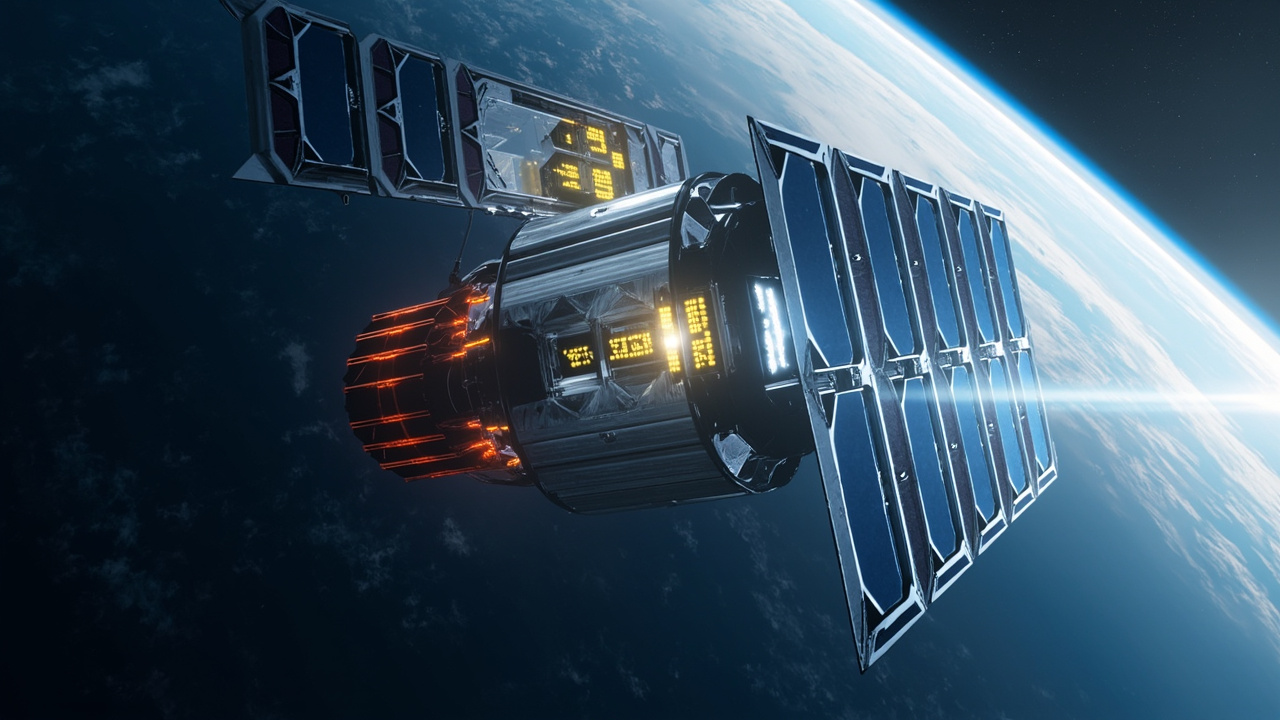
TL;DR: Google will launch a prototype satellite carrying four Trillium TPUs on SpaceX's Transporter-18 mission on October 1 to test whether AI chips can operate in low Earth orbit.
Google said on September 24, 2026, that it will launch a prototype satellite next week in its first in-orbit test of Project Suncatcher, according to Reuters.
The research effort explores whether space could potentially host large-scale AI computing infrastructure, according to Reuters.
The mission is scheduled to fly on SpaceX's upcoming Transporter-18 rideshare launch aboard a SpaceX Falcon 9 rocket, according to CNA and The Verge.
The flight was developed in partnership with Planet and with satellite company Planet Labs, according to Google.
After the launch, it will send a prototype satellite carrying Google Tensor Processing Units into low Earth orbit to assess if the AI chips can operate reliably in space, according to CNA.
What is Project Suncatcher
Project Suncatcher is a long-term research moonshot exploring whether space could one day host scalable machine learning infrastructure, according to Google.
The project was announced last year, according to Ars Technica.
Project Suncatcher explores if space can host scalable machine learning infrastructure for future AI, according to Google.
The central idea is that satellites in low Earth orbit can access near-constant sunlight, according to Reuters.
In low Earth orbit, satellites can access near-constant sunlight, generating up to eight times more solar power than on Earth, according to Google.
Companies including SpaceX and Starcloud are pursuing plans to deploy data centers in low Earth orbit, aiming to harness near-continuous sunlight to power energy-intensive AI computing and sidestep terrestrial constraints on electricity supplies, according to Reuters.
The concept has been discussed as an alternative to divisive terrestrial data centers, according to Ars Technica.
Google's experimental initiative could eventually put AI data centers into orbit, according to The Verge.
Eventually, it could be possible to link together multiple constellations of satellites, allowing them to manage larger AI workloads while in orbit, according to Google.
Future designs of satellites will each carry dozens of TPU chips while orbiting the Earth in clusters, according to Google.
Future missions aim to link satellite clusters using high-bandwidth lasers for massive AI workloads, according to Google.
This initial launch helps the team learn what works before scaling up by 2027, according to Google.
The MVP satellite launching October 1
The satellite is dubbed MVP and is about the size of a refrigerator, according to Ars Technica.
Inside, it has four of Google's custom TPU AI accelerators, which are used to train AI models and run inference to generate tokens for AI workloads, according to Ars Technica.
The satellite carries four specialized computer chips called tensor processing units which, combined, offer the power of a single server in a data center, according to Engadget.
A prototype satellite will test how Google's AI chips perform in harsh space conditions, according to Google.
The new mission will assess how Google's AI hardware withstands launch forces, radiation and extreme temperatures in LEO, according to CNA.
The goal of the mission is to measure how well its TPUs handle the physical stress of spaceflight and the radiation and thermal extremes of space, according to The Verge.
Google said it wants to know if space is a good place to run AI because satellites get plenty of solar power, according to Google.
The team is testing how their chips handle extreme heat, radiation, and the intense shaking of a rocket launch, according to Google.
Turning the idea into reality starts with a basic question about whether AI hardware can operate in space, according to Google.
This is just the first step in a long-term plan to build powerful AI systems in orbit, according to Google.
Built with Planet Labs on a rideshare
Google did not build the satellite from scratch, according to Ars Technica.
While the AI hardware inside is Google's, the spacecraft comes from satellite imagery firm Planet Labs, according to Ars Technica.
The company opted to integrate its chips into a satellite that Planet Labs had already built for an early test, according to Ars Technica.
The initial plan was to launch two custom satellites in 2027, but Google wanted to accelerate its efforts, according to Ars Technica.
This lone satellite will serve as a test of several technologies and will operate for just a few months, according to Ars Technica.
Eventually, Google wants to have networks of orbiting satellites that communicate over high-speed laser connections, probably requiring expensive dedicated launches, according to Ars Technica.
Google's first experimental satellite will launch on October 1 with the aim of validating Google's vision for a constellation of AI satellites, according to Ars Technica.
Google's AI test will launch as part of the upcoming Transporter-18 rideshare aboard a SpaceX Falcon 9 rocket, according to Ars Technica.
Why sunlight and power matter in orbit
On Earth, a data center will run thousands of these chips, which consume massive amounts of power, according to Ars Technica.
One reason putting solar-powered AI hardware in space is attractive is the scale of power demand for thousands of chips, according to Ars Technica.
MVP is starting small, with solar panels that supply only about one kilowatt of power, according to Ars Technica.
Solar panels will supply just one kilowatt of power to power the chips, which is equivalent to the energy needed to run a hair dryer, according to Engadget.
That power level is enough to power a microwave or a hair dryer, according to Ars Technica.
Google says this will be enough to test the hardware against the harsh conditions of space, according to Engadget.
The company plans to let the satellite answer simple AI queries for a year, according to Engadget.
Google will run Gemini models on the TPUs for testing, according to Ars Technica.
TPUs generate a large amount of heat in a small area, which needs to be diffused safely or the chips are at risk of overheating, according to Google.
Surviving launch vibration and g-force
A rocket trip into low Earth orbit lasts about 10 minutes, during which the spacecraft experiences intense vibration and sustained acceleration loads up to 10 times the force of gravity, or g-force, according to Google.
Individual components, such as the TPU chips, can experience even greater forces up to 50 to 100 g, according to Google.
Vibration and high g-forces during launch also pose problems for electronics, according to Ars Technica.
The team conducted vibration testing by intensely shaking the satellite on all three axes to mimic the frequencies of a rocket launch, according to Google.
During testing, Google found that its TPUs can withstand high levels of g-force and radiation, according to The Verge.
Engineers are tackling major challenges like extreme radiation, intense vibrations, and cooling in vacuums, according to Google.
In many space missions, hardware is designed specifically for extreme temperatures or radiation, but these are the same TPUs that Google integrates into servers on the ground, according to Ars Technica.
As seen with missions like the Ingenuity Mars helicopter, off-the-shelf hardware can hold up well in space, according to Ars Technica.
Radiation and bit flips at UC Davis
Once the TPU chips make it to space, the level of radiation outside the Earth's atmosphere presents another challenge, according to Google.
Solar events and cosmic rays can wreak havoc on electronics, according to Google.
Space radiation can disrupt or degrade electronics, including by causing data errors known as bit flips, according to CNA.
Radiation can damage chips or simply interfere with calculations by flipping bits, according to Ars Technica.
Radiation can seriously affect computer chips, causing something called bit flips, which essentially flips the binary code from a one to a zero, or vice versa, according to Engadget.
Google said it tested its TPUs while running AI workloads in a facility at the University of California, Davis, according to CNA.
The team tested TPUs in a proton beam facility at UC Davis's Crocker Nuclear Laboratory while running AI workloads, according to Google.
These chips have undergone tests to simulate space, including getting blasted with large amounts of radiation at Crocker Nuclear Laboratory, according to Engadget.
During the test, the team monitored closely to see how errors, like a bitflip, would affect workloads, according to Google.
Initial results have shown that Trillium TPUs hold up remarkably well, and can survive a radiation total ionizing dose greater than what they would receive during a five-year space mission, according to Google.
One approach to bit flips is restarting the chips when they act up, according to Engadget.
But some things can only be tested in space, according to Google.
Putting first TPUs in orbit next week will help get data and learnings to inform future launches, according to Google.
Cooling without air in a vacuum
Cooling orbital data centers is a crucial research challenge, according to Google.
Cooling the chips may be the biggest issue raised about orbital data centers, according to Ars Technica.
Radiator systems exist in space, but they are designed to remove a relatively small amount of heat, while AI accelerators generate far more heat by comparison, according to Ars Technica.
But in space, there is no airflow, according to Google.
In a vacuum, heat can only be diffused via radiators, which requires a totally different approach to cooling electronics, according to Google.
The company will also evaluate its design to cool the power-intensive chips in the vacuum of space, where conventional airflow cooling is impossible, by combining heat pipes with radiators, according to CNA.
Google's solution uses a layer of malleable thermal interface material that connects the chips to aluminum and copper heat pipes, according to Ars Technica.
Those components conduct heat into a radiator that can project it into space, according to Ars Technica.
The team is working on a number of different approaches, including a combination of heat pipes and radiators to cool the chips, according to Google.
So far, the team has tested the technology in a thermal vacuum chamber that simulates both the thermal and vacuum environment in space, according to Google.
The team will see how the new TPU cooling system works in space and refine designs as more is learned, according to Google.
Fifteen-minute runs and thermal limits
Google will run Gemini models on the TPUs for testing, but they will not be able to run continuously, according to Ars Technica.
The cooling system will only be able to operate in brief spurts of about 15 minutes, according to Ars Technica.
After that, the TPUs need to shut down to allow the radiators to catch up, according to Ars Technica.
There is also a proprietary cooling system in place that uses layers of conductive material to expel heat into space, though it only works for around 15 minutes before the chips have to be turned off to cool down, according to Engadget.
Travis Beals, Project Suncatcher's senior director of product management, said the chips can only run for about 15 minutes before they will need to be turned off to cool down, according to The Verge.
Travis Beals is Senior Director, Paradigms of Intelligence, according to Google.
Beals said exploring space as a viable location for scalable AI compute will not happen all at once, according to The Verge.
Beals said it takes methodical engineering, starting with proving hardware can handle the physical and unpredictable realities of operating in orbit, according to The Verge.
Beals said this first launch is about seeing what works, identifying points of failure, and applying those findings to future missions, according to The Verge.
Lasers, constellations and the 2027 test
To maintain the bandwidth necessary to process AI, every satellite has to know both its own position and where it sits relative to its neighbors, according to Google.
To do this, the satellites will communicate via lasers, according to Google.
The technology in space already exists, but most state-of-the-art systems are optimized for low bandwidth across large distances, whereas the lasers needed need to operate at very high bandwidth over extremely short distances, according to Google.
Maintaining the necessary connection requires extraordinary precision, similar to hitting a coin-size target from miles away while both points are in motion, according to Google.
Google will test work on this in 2027 when it puts two satellites in orbit, according to Google.
Google plans to put two satellites into orbit next year, according to The Verge.
It aims to launch two satellites in 2027 to test the high-bandwidth laser links needed to connect future computing clusters, according to CNA.
The 2027 launches are still on the agenda, but the team expects it will be years before Suncatcher evolves from project to product, according to Ars Technica.
Experts have said that the concept remains years from being commercially viable given high launch costs, engineering constraints and satellite production bottlenecks, according to CNA.
The first Suncatcher mission is designed to gather in-orbit data and identify potential failure points, rather than demonstrate an operational orbital data center, according to CNA.
Exploring space as a viable location for scalable AI compute will not happen all at once and takes methodical engineering, according to Google.