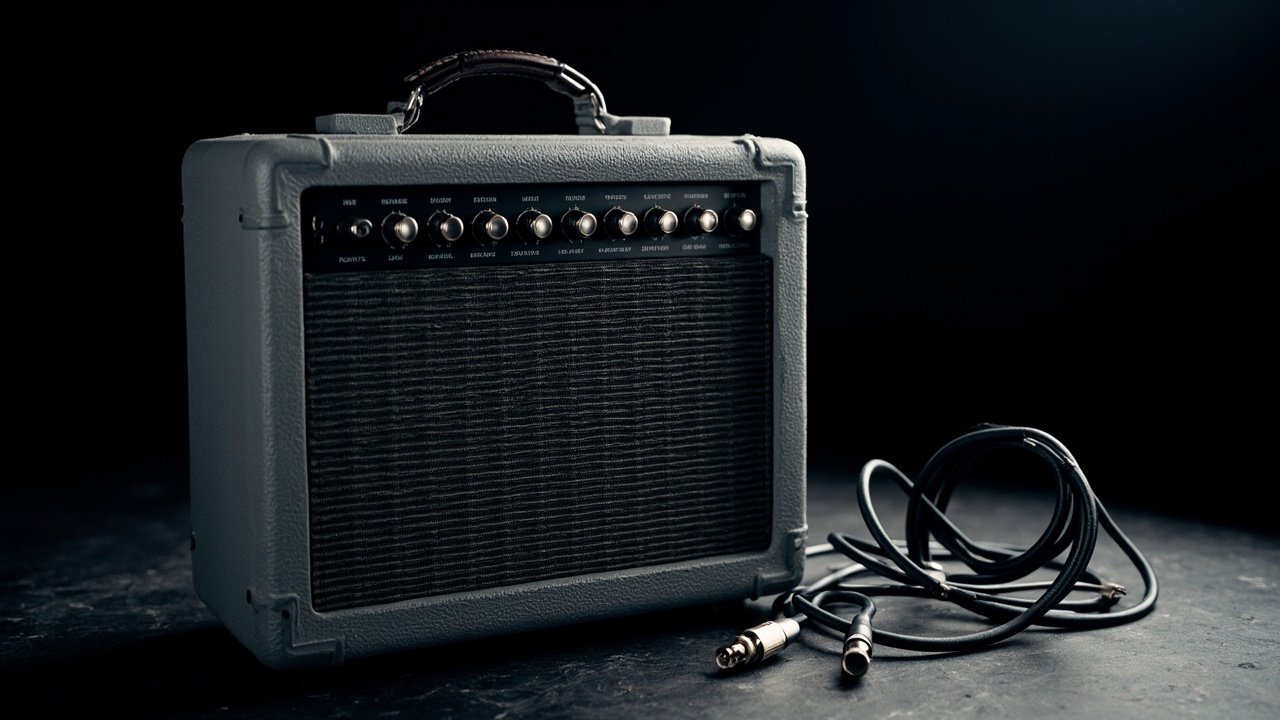
TL;DR: Teenage Engineering released the EP-35 K.O. AMP on Oct. 22, 2026, a battery-powered multi-instrument amp with preset guitar and vocal effects for $399.
Teenage Engineering has entered the instrument amplifier category with a portable, battery-powered unit that handles guitar, microphone, line-level synthesizers, and Bluetooth audio in one box. The product is called the EP-35 K.O. AMP, and it became available for purchase on Oct. 22, 2026, at a United States price of $399, according to The Verge. The launch followed a leak that had circulated on social media, forums, and in a federal filing in the days before the announcement, according to Synth Anatomy.
A portable amp built for several instruments at once
The EP-35 K.O. AMP combines an instrument amplifier and a Bluetooth speaker in a compact format, according to Synth Anatomy. The Swedish company designed the unit to work with guitars, microphones, stereo line signals, and Bluetooth audio without requiring the player to choose one source at a time.
The design uses six input channels and a summing mix signal path, which means several instruments can sound at the same time, according to Gearnews. That approach means a guitar, a microphone, and a synthesizer or keyboard connected to the line input can all be heard together. The earlier filing documentation summarized the same idea in plain terms as gathering family and friends to play together without selecting an active input.
The top panel carries the physical connections. Those include a 3.5-mm line input, a 1/4-inch guitar input, an XLR microphone input, a 3.5-mm line output, and USB-C connections, according to The Verge and Synth Anatomy. The guitar input is a 6.35-mm jack with low- and high-gain settings, while the XLR microphone input supplies 48V phantom power for condenser microphones, according to Synth Anatomy and Gearnews. The unit also includes stereo line inputs and outputs for connecting additional audio equipment, according to Synth Anatomy.
Power, speakers, and outdoor-friendly construction
The amplifier is rechargeable over USB-C and includes an integrated battery and a built-in carrying handle for transport, according to Synth Anatomy. The USB connection also supports use with a computer or phone as a sound card and for software updates, while a separate host connection supports thumb drives, USB audio devices, and accessories.
Inside, the filing documentation described a speaker pair consisting of a 30-watt woofer and a 25-watt tweeter, with a stated frequency response of 50Hz to 20kHz, according to Gearnews. That speaker information came from manual material associated with the pre-release filing, and the same figures were reported in the Oct. 15, 2026 filing coverage. The production unit retains the compact blocky form associated with the EP line.
The enclosure uses a gray plastic chassis, removable grilles on the front and back, and a handle at the top, matching the color and style of the EP-133 K.O. II Sampler, according to Gearnews. The company also uses an EP-Grid system that allows other EP-series devices to be attached directly to the housing of the EP-35, according to Synth Anatomy. A K.O. Dock Kit connects one full-size or two half-size EP-series devices directly to the EP-35 grille and includes four clips and a 90-mm stereo TRS cable for connecting an EP device to the line input, according to Gearnews.
For outdoor use, the unit is described as splash-proof, with manual guidance to enjoy it outdoors but not to drop it in a lake or pool, according to Gearnews. Behind the plastic grille on the back is a storage compartment for cables, USB drives, and small items, according to filing coverage. Opening the compartment turns on a built-in camp light, described as including a disco mode, and the storage area is also described as providing illumination for sessions after sunset, according to music-technology coverage and Synth Anatomy.
Preset effects replace traditional knobs
The EP-35 includes separate effects processors for guitar and vocals, but the control scheme is intentionally simple, according to The Verge. Instead of selecting an individual effect and adjusting parameters such as delay time, the player selects a style-based preset and then adjusts the intensity with a single amount control.
For guitar, preset names include blues, indie, and twang, each applying a specific selection of effects, according to The Verge. The vocal channel works the same way, with different options including radio and robo choir, according to The Verge. Broader product summaries describe eight built-in effects and amplifier presets for guitar and microphone combined, allowing players to shape sound directly on the device, according to Synth Anatomy and Gearnews.
The EP-127 K.O. Pedal adds more control over those built-in effects when paired wirelessly with the amplifier, according to The Verge. It also unlocks a looper and metronome, giving players tools for practicing, layering parts, and keeping time without adding separate pedals, according to The Verge and Synth Anatomy.
Bluetooth audio, Auracast linking, and tilt stereo
Beyond instruments, the EP-35 functions as a wireless speaker. Audio can be streamed to the amplifier over Bluetooth, and multiple EP-35 units can be connected together over Bluetooth using Auracast, according to The Verge. The implementation includes Bluetooth with LE Audio and a broadcast mode, according to Gearnews.
When two units are paired in stereo, tilting a unit to the left or right sets it to the appropriate stereo channel, according to The Verge. The filing material also indicated that multiple amplifiers can be stacked to create a larger multi-speaker arrangement, while the wireless linking allows separate units to work together without cables.
The amplifier also supports FM radio reception when used with a dedicated antenna accessory. The add-on plugs into the EP-Plug port and turns the amplifier into a portable FM radio, according to Gearnews and Synth Anatomy. That feature separates broadcast radio listening from Bluetooth streaming, giving the same portable box three broad audio roles: instrument amplification, wireless speaker playback, and FM radio.
EP-127 K.O. Pedal adds foot control and computer use
The most elaborate companion product is the EP-127 K.O. Pedal, a wireless guitar and voice pedal controller for the K.O. AMP, according to Gearnews. Instead of conventional click switches, it uses two large pressure-sensitive buttons that rock back and forth for expression, according to Gearnews and Synth Anatomy.
Paired with the K.O. AMP, the wireless pedal adds control over the built-in effects and unlocks the looper and metronome functions, according to Synth Anatomy. It includes an expression-pedal jack that can control the volume of a selected channel on the amplifier, according to The Verge. The pedal communicates over Bluetooth LE and USB-C, and it can operate in effects, looper, metronome, and playback-control modes, according to product-summary reporting.
The pedal is not limited to amplifier control. It has a 3.5-mm MIDI output and works as an HID controller, so it can be used with other synthesizers, pedals, or a computer, including control of video playback from a computer, according to The Verge. It can therefore function as a MIDI or HID controller when connected to a computer, according to Synth Anatomy. The unit runs on two AAA batteries or over USB-C, measures 176 by 84 by 26 mm, and weighs 0.2 kg, according to detailed accessory listings.
The EP-127 K.O. Pedal is priced at $99 in the United States and 99 euros in Europe, according to accessory price reporting. That price places it well below the amplifier itself while adding performance functions that the amplifier alone does not expose through its onboard controls.
Amptenna, Handy Mic, USB drive, and mounting accessories
Teenage Engineering introduced several smaller accessories alongside the amplifier and pedal. The Amptenna plugs into the EP-Plug port and turns the amplifier into an FM radio, according to The Verge and Gearnews. It is priced at 29 euros, according to accessory price reporting.
The Handy Mic is a compact microphone for vocals and karaoke that connects through a three-pin XLR connector, according to Synth Anatomy. It includes an integrated push-to-talk button that activates the microphone and uses a coiled cable that extends up to 1.5 meters, according to Synth Anatomy and accessory listings. The microphone is described as an XLR electret condenser microphone that requires phantom power, which the EP-35 supplies through its XLR input. It is priced at $29 in the United States and 29 euros in Europe.
The 16GB USB Drive plugs into the K.O. AMP and begins playback, with Side A containing instrumental tracks for jamming and Side B containing drum loops, live breaks, and electronic beats, according to Gearnews and accessory listings. Users can also place their own audio files on the drive. It is priced at $29 in the United States and 29 euros in Europe.
The K.O. Dock Kit, mounting hardware, storage products, and cables round out the lineup. The dock kit is priced at 15 euros and includes clips and a short stereo cable for EP devices, according to Synth Anatomy and Gearnews. The guitar textile cable measures 3 meters and is priced at 29 euros. Separate soft goods include the K.O. AMP 35 Eyelet Bag, K.O. AMP 35 Pocket Bag, K.O. Amp 35 Strap, and K.O. Amp 35 Cylinder Case, while a Pocket Bag is also offered for the EP-133 K.O. II or EP-136, according to accessory listings. A bundle containing the Handy Mic, K.O. Dock Kit, USB Drive, and Amptenna is offered as the K.O. AMP Add-on Bundle.
From FCC filing to store shelves in one week
The EP-35 had been publicly anticipated before its Oct. 22, 2026 release. On Oct. 15, 2026, music-technology coverage reported that a recently surfaced FCC filing showed Teenage Engineering preparing a portable battery-powered amplifier called the EP-35 K.O.-AMP. The filing contained pictures and a user manual and was first highlighted on Reddit, according to that coverage.
That pre-release material correctly identified the portable battery-powered format, guitar and microphone inputs, Bluetooth support, storage compartment, camp light, splash resistance, 48V phantom power, USB-C device and host ports, FM radio, and Auracast linking. It also correctly identified the 30-watt woofer, 25-watt tweeter, and 50Hz-to-20kHz response figures, although that early coverage noted the specifications could change before release.
The formal launch one week later confirmed the product name, the multi-instrument positioning, the preset-effects approach, the $399 United States price, and the companion ecosystem. In Europe, the amplifier is listed at 399 euros, according to Gearnews and Synth Anatomy. United States availability was reported as immediate on Oct. 22, 2026, by The Verge, with European retailer listings also showing the amplifier as available now.
Why a preset-driven amp matters for beginners and travelers
The EP-35 arrives as part of the EP range that includes the EP-133 K.O. II Sampler, extending that product family from sampling and sequencing into live amplification, according to Gearnews. The shared gray retro styling, EP-Grid mounting, dock accessories, and matching bags position the amplifier as a hub for mobile setups rather than only as a conventional guitar combo, according to Synth Anatomy.
The simultaneous-input design is central to that positioning. Because the amplifier provides a summing mix signal path across six input channels, players can use guitar, microphone, stereo line, and Bluetooth sources together, according to Gearnews and Synth Anatomy. That makes it possible for one box to support a small jam with voice, guitar, and a pocket synthesizer, or for a solo performer to sing while accompanying recorded tracks or looped parts.
The preset-effects system lowers the learning curve for players who do not want to program individual effects. A guitarist chooses blues, indie, twang, or another guitar preset and sets the amount with one knob, while a vocalist chooses radio, robo choir, or another voice preset through the same one-knob method, according to The Verge. More experienced users can add the wireless pedal for expanded effects control, looping, metronome timing, MIDI output, and expression input, according to The Verge and Gearnews.
Portability reinforces the travel and outdoor use case. The integrated battery, USB-C charging, carrying handle, storage compartment, camping light, splash-proof construction, Bluetooth speaker operation, and FM-radio option allow the same unit to move from a bedroom to a campsite to a small rehearsal without separate power, speaker, mixer, and radio boxes. The Auracast multi-unit linking and tilt-to-assign stereo channels add a\ shared-listening option for owners of more than one EP-35, according to The Verge.
What to know before buying
Buyers should confirm which inputs their instruments and microphones require. The EP-35 provides a 6.35-mm guitar input with low- and high-gain settings, an XLR microphone input with 48V phantom power, stereo line inputs and outputs, USB audio interfacing, and Bluetooth audio, according to Synth Anatomy and Gearnews. Condenser microphones that need phantom power, including the Handy Mic, can draw that power from the amplifier’s XLR input.
Buyers should also decide whether they want the pedal or radio accessories at the outset. The core $399 amplifier includes the onboard guitar and vocal presets, Bluetooth playback, simultaneous mixing, battery power, storage, and USB-C connectivity. The EP-127 pedal adds foot-based effects control, looper, metronome, expression input, MIDI output, and computer HID control. The Amptenna adds FM radio reception, the Handy Mic adds a matched push-to-talk vocal microphone, and the USB drive adds ready-made jam tracks and beats.
European pricing reported for the launch places the amplifier at 399 euros, the pedal at 99 euros, the Handy Mic, Amptenna, USB drive, and 3-meter guitar textile cable at 29 euros each, and the dock kit at 15 euros, according to Synth Anatomy. United States reporting confirms the $399 amplifier price, $99 pedal price, and $29 prices for the Handy Mic and USB drive, according to accessory listings and The Verge. Availability is listed as now through Teenage Engineering and participating retailers.
Sources referenced
- Teenage Engineering launched an instrument amp with a ton of built-in effects | The Verge (https://www.theverge.com/gadgets/1017022/teenage-engineering-ep-35-instrument-amp)
- Teenage Engineering expands its K.O. range with the EP-35 AMP, EP-127 Pedal and more - SYNTH ANATOMY (https://synthanatomy.com/2026/10/teenage-engineering-expands-its-k-o-range-with-the-ep-35-amp-ep-127-pedal-and-more.html)