TL;DR: Google's Pixel Tag costs $29.99 for one and $99.99 for a four-pack, and it combines ultra wideband with Bluetooth Channel Sounding for close-range finding on Android phones; Google's stated on-sale date is November 11, 2026.
Google's first item tracker for its own Find Hub network is a slim, stainless-steel oval that pairs with Android phones and reports its position through other Android devices nearby. The price is $29.99 for a single tag or $99.99 for four, according to The Verge's November 10 report, and Google has attached November 11 to the retail debut.
What the Pixel Tag costs, and when Google says it arrives
Google announced the Pixel Tag on August 12, 2026, at the same event where it introduced the Pixel 11 series and the Pixel Watch 5, according to The Verge's launch coverage. That report put the price at $29 for one tag and $99 for a four-pack, framed as matching Apple's AirTag 2, and named November 11 as the day sales would begin.
By November 10, The Verge's figures read $29.99 for a single tracker and a four-pack discounted to $99.99, and 9to5Google listed the same two amounts while reporting that no orders were being taken that day. Android Authority noted that buying four together saves $17 compared with four separate purchases.
Google's store listing described the product as coming in November 2026, and the company's August blog post said a single tag would cost $29 and a four-pack $99 starting November 11.
Why two November 10 reports disagreed
The Verge's Andrew Liszewski wrote that the Pixel Tag was "now available for purchase," placing it after years of third-party Android trackers from Samsung, Motorola and Pebblebee.
Hours later, 9to5Google's Ben Schoon reported that the Google Store was not accepting orders for the tag, nor were third-party retailers that had been linked in posts about availability. Schoon wrote that the official release date was November 11 and quoted a Google blog post published that morning, which said the Pixel Tag "offers peace of mind so you always know where your most important things are" and would be "available November 11."
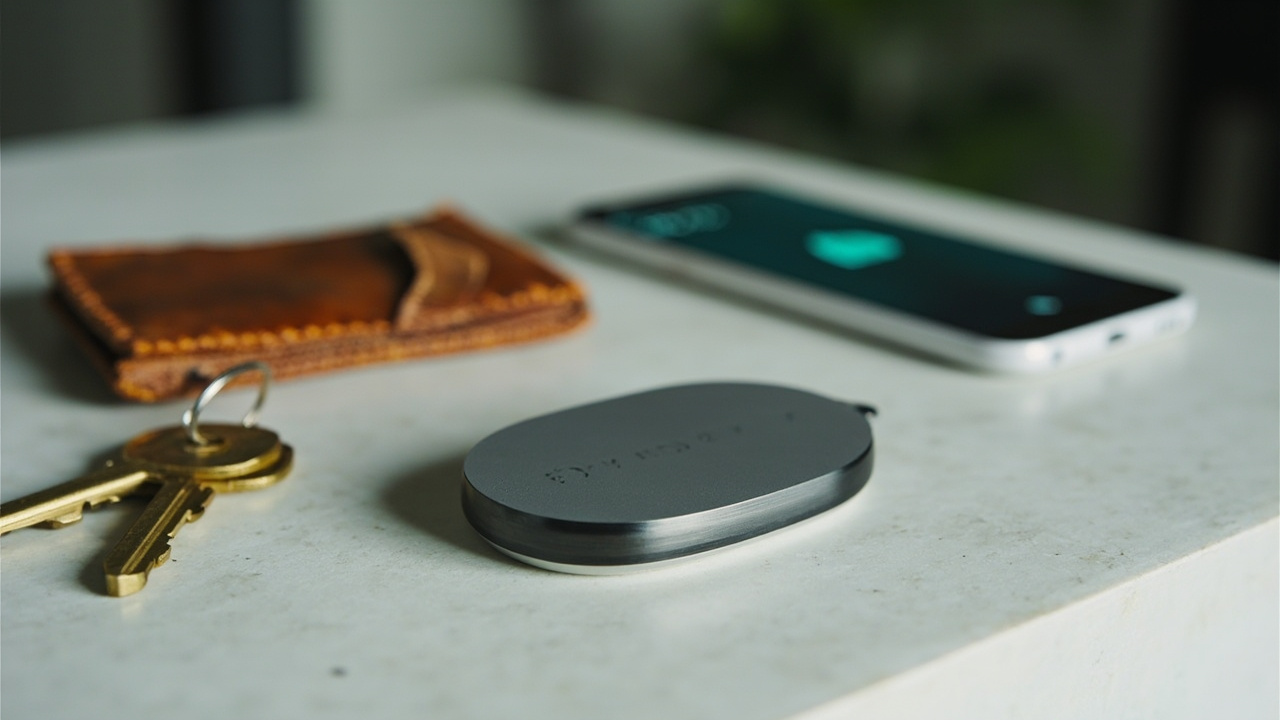
A slim steel body with a battery you can swap
Google lists the tag at 1.1 inches wide, 1.8 inches tall and 0.2 inches deep, at 0.4 ounces with the battery inside. TechCrunch set those numbers against Apple's AirTag, which measures 1.26 inches across and 0.31 inches thick, while Tom's Guide recorded the metric equivalents at 28 by 46.1 by 5.4 millimeters and 11.8 grams.
The shell combines polycarbonate and stainless steel, and Google rates it IP67 for dust and water, meaning it should survive immersion in up to one meter of water for 30 minutes under IEC standard 60529. One finish is offered, which Google calls Fog. The August announcement said the body is designed to resist flexing and cracking, and the store page lists a one-year warranty.
Setting one up takes a pull of the battery tab and a walk through on-screen prompts. Google says the tag pairs over Fast Pair, then lets the owner pick an item category or type a custom label in Find Hub.
Inside sits a CR2032 coin cell that the owner can replace. Google's store page says a single battery lasts for over a year, and 9to5Google reported that the battery door opens more easily than the Moto Tag's does.
A speaker handles the audible part of the search, and TechCrunch reported three volume settings with a maximum of roughly 80 decibels. 9to5Google's reviewer found the top setting more than loud enough and the low setting quiet enough to avoid being a nuisance.
UWB and Channel Sounding do different jobs
Two close-range radios separate the Pixel Tag from most Android alternatives, and they return different information.
With an Android phone that has an ultra wideband chip, the Find Hub app shows the distance to the tag and the direction toward it, The Verge reported. Bluetooth Channel Sounding, which needs Bluetooth 6.0 on the phone, supplies distance only. The Verge described Motorola's Moto Tag 2 as the only other tracker supporting Channel Sounding at the time of its August report.
Pairing is broader than precision finding. Google says the tag connects to phones running Android 9 or later through Fast Pair, but the close-range readouts depend on hardware many phones lack. The Verge reported that Pixel owners need a Pixel 10 or newer for Channel Sounding and that UWB has appeared on Pro models since the Pixel 6, leaving the base Pixel 11 without it. On the wrist, Pixel Watch models from the 4 onward support Channel Sounding, and models from the 2 onward include UWB.
Tom's Guide's John Velasco measured the UWB connection holding to roughly 82 feet, against about 74 feet for an AirTag 2 in the same test. 9to5Google's Schoon found directional cues fading within about 10 to 12 feet on a Pixel 11 Pro XL, which he judged workable for a backpack but potentially troublesome for keys.
A button that searches in reverse
A double-press of the button on the tag rings the paired phone at full volume, even when the handset is silenced or set to vibrate, according to Tom's Guide and 9to5Google. Schoon reported that the function worked reliably in his testing and singled out the volume control placed on the same screen used to ring the tag.
Google describes the same feature on its store page and blog, along with ways to ring the tag through Gemini on Pixel Buds or to locate it from a Pixel Watch.
Find Hub adds alerts when a tagged item is left behind, and 9to5Google reported that those alerts can exclude places such as home or work. TechCrunch reported that a tag in lost mode can display the owner's email address, phone number and a short message to whoever finds it, and that the item is marked as found automatically once it returns to range. Location sharing covers up to 10 people, per Google and TechCrunch. Google's blog also says a phone will notify its owner when an unknown tag is traveling with them, with instructions for ringing it.
What early reviewers found, and what a week cannot show
The first reviews appeared on November 10, several with a caveat about time. Schoon wrote that he had used the tag for a week and that a proper review of a tracker in that window is impossible, since the moments that matter happen in ordinary life. He still called it the gold standard among Find Hub trackers for Android. Tom's Guide's verdict described the Pixel Tag as the most findable tracker for Android phones, crediting its Precision Finding range and low-battery reminders that repeat every two weeks until the cell is swapped. Android Authority's hands-on reported that Find Hub flagged a set of lost keys in under five minutes. Schoon also noted there is no visual marker showing where the button sits, though the packaging and app explain it.
The network drew more cautious notes. The Verge reported in August that Find Hub had improved since a difficult start but remained less precise than Apple's when its reviewer tested it in 2025. Schoon described Find Hub performance as hit or miss and wrote that Google is working to reverse a privacy-driven decision that effectively disabled the network outside crowded areas. He said a longer-term review would follow in the coming months.
What's missing from the box
There is no hole, loop or clip on the tag, so tethering it to keys or a bag requires a separate holder. Tom's Guide listed the lack of a native keyring hole and a thin selection of launch accessories among its drawbacks, and 9to5Google's reviewer called the need for an add-on frustrating.
Bellroy, one of Google's partners, makes a silicone case with a cord, sold as a two-pack for $25, 9to5Google reported; TechCrunch noted that Bellroy cases would also appear in the Google Store.
NFC turned up in the shipping product without featuring in the August announcement. TechCrunch reported that a tap connects the phone to the tag's settings rather than to a lost-item contact page, which means a stranger who finds one cannot tap it for the owner's details.
Why the Pixel Tag matters
Google spent more than two years running a tracking network before building hardware for it, The Verge reported, and the Pixel Tag is the first tag the company has made for that network. Third-party tags from Chipolo, Pebblebee and Motorola already worked with the service before Google shipped one of its own, 9to5Google reported. The scale underneath it is the pitch: Google describes more than a billion Android devices contributing location reports, with location data encrypted end to end.
For Android owners, the appeal is a first-party tag that adds precision finding and a way to ring a misplaced phone inside the app Google already ships. Whether it holds up across a season of travel is the question the early reviewers left open.