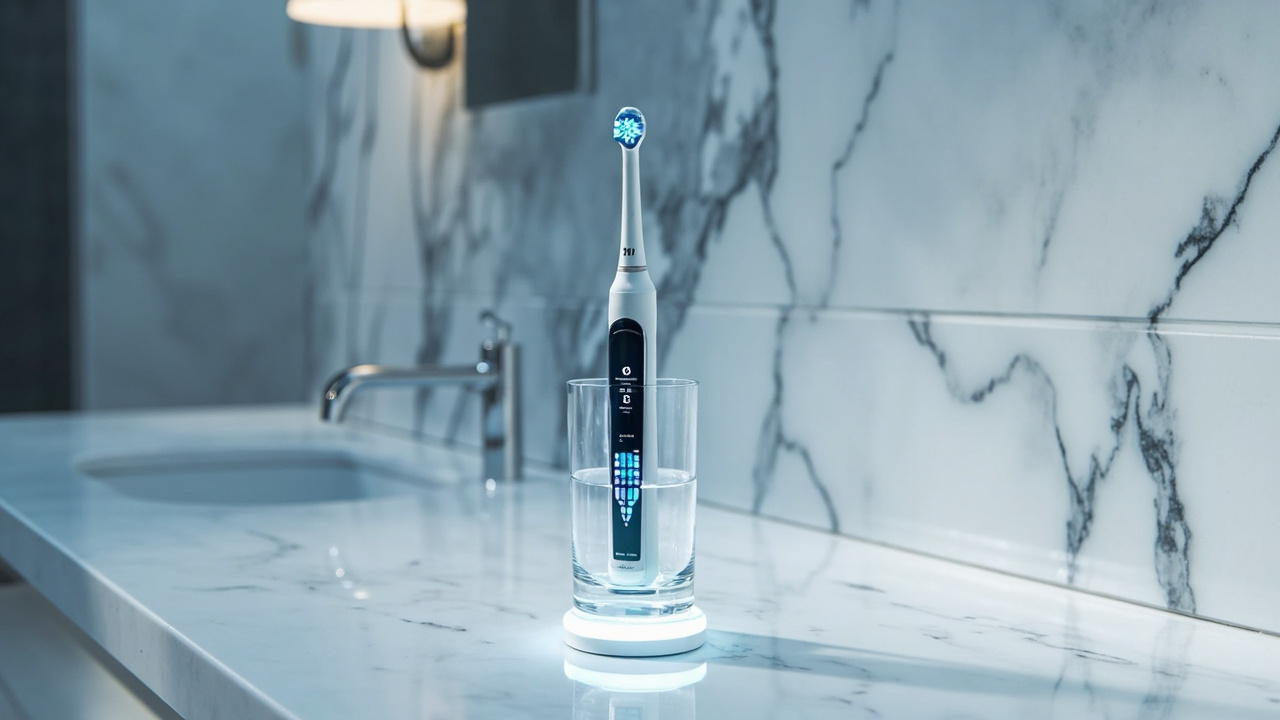
TL;DR: Philips’ Sonicare Next-Generation DiamondClean 9900 Prestige is now available in the U.S. for $379.99 with a touchscreen, 12-segment mouth map, and third-generation AI that tracks motion, pressure and coverage.
U.S. launch answers the price question
Philips first announced the brush in July with an expected limited launch later in the year, and the product is now available in Europe and the U.S., according to The Verge.
The Verge reported on Sept. 28, 2026, that a broader global rollout is expected in 2027.
The new Next-Gen DiamondClean version is debuting for $379.99 in the U.S., even with added capabilities, according to The Verge.
The previous iteration is still available and discounted from $429.99, according to The Verge.
That U.S. debut price is lower than Dyson’s $499 CameraJet smart toothbrush, according to The Verge.
The Verge also noted that some early adopters are having issues with Dyson’s CameraJet.
In the United Kingdom, the same Philips flagship sits at the premium end at £599, or around $800, according to T3.
T3 reported on Sept. 23, 2026, that the U.K. version will be available from selected retailers including Boots, Amazon and selected dental practices.
T3 listed the U.K. color choices as black, white and blue.
U.S. reviewer material lists three U.S. color options as Quartz Black, Silver White and Satin Mauve, according to Prevention.
Prevention published its hands-on review on Sept. 24, 2026, after testing the $380 toothbrush for weeks.
What changed on the handle
The biggest new feature is AI-powered brushing guidance built directly into the handle, giving instant feedback on brushing, according to T3.
T3 described the product as what Philips describes as its most advanced electric toothbrush yet.
The toothbrush includes a touchscreen on the handle, according to The Verge.
The touchscreen can be used to select from eight different cleaning modes and three intensity levels, according to The Verge.
The Verge noted that the options include gentle options for sensitive teeth or gums.
Prevention listed the three intensities as High, Medium and Low.
Prevention listed the eight modes as Clean, Deep Clean, Polish, Sensitive, Gum Health, White, Max Care and Comfort.
The touchscreen allows swiping through cleaning modes and intensity levels and selecting an option by pressing a secondary button, according to Prevention.
Prevention described the handle as having two buttons, a power button and a secondary button, plus the built-in touchscreen.
Prevention described the DiamondClean 9900 Prestige as sleek, lightweight and comfortable to hold.
The touchscreen also displays brush-head tracking and battery life, according to Prevention.
Battery life is listed as 14 days, according to Prevention.
The product warranty is listed as 2 years, according to Prevention.
You can customize the experience with eight brushing modes, three intensity settings and different types of feedback from the light ring, according to T3.
12-segment mouth map explains missed spots
The screen displays a 12-segment mouth map representing sections of teeth in the mouth, according to The Verge.
The map changes color to indicate when the motion-detecting toothbrush thinks brushing was effective, or where a redo is recommended, according to The Verge.
There is also a 12-segment Mouth Map built into the handle, showing which areas have been brushed and whether any spots were missed, according to T3.
Philips calls the real-time guidance spatially aware guidance, according to T3.
The system uses a light ring showing brushing coverage, pressure and whether brushing involves scrubbing too hard, according to T3.
The toothbrush’s touchscreen can display a mini map of the mouth to indicate what parts have been effectively cleaned during brushing, according to The Verge.
Real-time smart coverage feedback helps identify missed areas, according to Dimensions of Dental Hygiene.
The 12-segment Mouth Map shows where additional attention may be needed, according to Dimensions of Dental Hygiene.
The Philips Sonicare app includes a real-time visual mouth map and daily tracking, according to Prevention.
The app tracks and offers feedback on total brushing time, missed areas, pressure and scrubbing, according to Prevention.
The reviewer paired the toothbrush via Bluetooth with the Philips Sonicare app, according to Prevention.
The app offers real-time guidance and progress tracking, according to Dimensions of Dental Hygiene.
Personalized coaching is offered through the Sonicare App, according to Dimensions of Dental Hygiene.
Personalized guidance is intended to help users brush better, according to Prevention.
SenseIQ and third-generation AI adjust the clean
In addition to the screen, the Next-Generation DiamondClean 9900 features a glowing, color-changing light ring on the base, according to The Verge.
The light ring works alongside a third-generation AI model and Philips’ SenseIQ technology to signal pressing too hard during cleaning, according to The Verge.
The 9900 can also adjust its own vibration intensity based on technique to support safe and effective brushing, according to The Verge.
SenseIQ pressure sensing can also automatically adjust intensity if pressure is too hard, according to T3.
The high-tech toothbrush uses AI to track brushing in real time, according to Prevention.
The new Philips toothbrush uses specialized AI-powered technology to monitor pressure, motion and coverage to automatically adapt and adjust intensity, according to Prevention.
It senses pressure and scrubbing to adapt to brushing style, according to Prevention.
Smart pressure feedback helps users avoid brushing too hard, according to Dimensions of Dental Hygiene.
Scrubbing detection is included to improve technique, according to Dimensions of Dental Hygiene.
SenseIQ technology adapts to individual brushing habits, according to Dimensions of Dental Hygiene.
The Next-Generation DiamondClean 9900 Prestige uses AI models to automatically switch between brush modes depending on brushing style and tooth sensitivity, according to Gizmodo.
Gizmodo reported on Sept. 28, 2026, that the Philips update arrived the same month Dyson introduced its camera-equipped brush.
The Philips model does not include a camera or a waterpik, according to Gizmodo.
Gizmodo noted that the Philips brush creates a map of the mouth in 12 segments to show where brushing was inadequate.
Gizmodo also noted that the toothbrush has a screen.
Cleaning system and claimed plaque results
For the actual clean, the 9900 Prestige uses Philips’ Sonicare Fluid Action technology, according to T3.
That technology helps move fluid between the teeth and along the gumline, according to T3.
The brush pairs that fluid action with the company’s latest Sonicare drivetrain, according to T3.
Philips says the combination provides a quieter clean while remaining gentle but effective, according to T3.
The DiamondClean 9900 Prestige is an electric toothbrush that uses automatic bristle movements to clean teeth, according to Prevention.
Beyond guidance features, the DiamondClean 9900 Prestige removes up to 20 times more plaque than a manual toothbrush, according to Dimensions of Dental Hygiene.
Dimensions of Dental Hygiene attributed the plaque comparison to use versus a manual toothbrush.
The brush delivers up to 15 times healthier gums in Clean mode versus a manual toothbrush, measured by MGI at six weeks, according to Dimensions of Dental Hygiene.
Prevention quoted dentist Adam Salm, D.M.D., as saying electric brushes eliminate many at-home mistakes and help maintain routine.
Prevention quoted dentist Keith Arbeitman, D.D.S., as saying some electric models can limit pressure on teeth and gums.
Prevention quoted Arbeitman as saying much of his dental work follows from brushing too hard and damaging teeth and gums or brushing too softly or briefly and allowing bacteria to linger, causing gingivitis or cavities.
Prevention noted that timers on electric toothbrushes can help users brush the full two minutes for a proper clean.
Charging glass, travel case and daily use
The toothbrush comes with an extra toothbrush head, a glass cup charger and a travel case, according to Prevention.
The glass cup sits on top of a charging base, which plugs into an outlet with the provided cable, according to Prevention.
Placing the toothbrush in the cup starts charging immediately at any angle, without requiring upright placement, according to Prevention.
The glass cup can be lifted off the base and used to rinse the mouth after brushing, according to Prevention.
T3 also listed a rechargeable travel case and luxury charging glass as included.
Prevention described the travel case as sleek, slim and compact.
The travel case also doubles as a charger, based on the reviewer’s description of a sleek, compact charging travel case, according to Prevention.
Prevention listed the travel case’s lack of space for the charging cable as a drawback.
Price was the other listed drawback, with Prevention summarizing the cons as pricey and limited cable storage in the case.
Prevention listed real-time feedback and mouth mapping among the product’s advantages.
How a three-week test played out
The Prevention reviewer used the Philips Sonicare DiamondClean 9900 Prestige every day for about three weeks, according to Prevention.
Brushing took place at least twice per day and covered different intensity levels and cleaning modes, according to Prevention.
The reviewer downloaded and paired the toothbrush via Bluetooth with the Philips Sonicare app, according to Prevention.
The reviewer said the touchscreen brush-head tracking, battery display and mouth-map coverage tracking were easy to use, according to Prevention.
The reviewer had previously used an Oral-B Pro as a go-to electric brush but had not previously used a smart electric toothbrush, according to Prevention.
The reviewer sought better control of oral health after a dental visit involving inflamed gums and frequent bleeding during brushing or flossing, according to Prevention.
The review asked whether added sensors and guidance could improve routine and whether the product justified its steep $380 price, according to Prevention.
Prevention framed the hands-on answer around pressure sensing, motion tracking, coverage mapping and app feedback.
Why Philips points to rushed nighttime routines
A survey by Philips Sonicare, conducted by Wakefield Research, included 1,000 U.S. adults ages 18 and older in an online survey in May 2026, according to Dimensions of Dental Hygiene.
Results showed 82% of Americans multitask while getting ready for bed, rising to 92% among adults younger than 40, according to Dimensions of Dental Hygiene.
Nearly half, or 47%, admit they sometimes rush through brushing, according to Dimensions of Dental Hygiene.
The same report said 82% multitask during the nighttime routine, according to Dimensions of Dental Hygiene.
While 91% of Americans say teeth feel clean after brushing, 66% believe they miss certain teeth or areas, according to Dimensions of Dental Hygiene.
The report described that gap as a disconnect between perception and performance, according to Dimensions of Dental Hygiene.
Nearly half, or 47%, of Americans who brush regularly say they may skip brushing before bed because they are too tired or fall asleep beforehand, according to Dimensions of Dental Hygiene.
Fatigue was identified as the most common reason for missing nighttime brushing, according to Dimensions of Dental Hygiene.
After learning more about overnight bacteria and plaque buildup, 81% said they would be likely to change their oral-care routine, according to Dimensions of Dental Hygiene.
Philips Sonicare’s Next-Generation DiamondClean 9900 Prestige uses smart technology and personalized feedback to help patients identify missed areas and achieve a more thorough clean, according to Dimensions of Dental Hygiene.
Dimensions of Dental Hygiene said the features are built to support more effective brushing during busy, distracted routines.
Smart-brush competition sharpened in September
The Philips launch arrives as premium electric brushes add sophisticated feedback, including the new Dyson CameraJet, according to T3.
T3 noted that Oclean launched its new X Series the prior day, showing feedback features are not limited to the most expensive models.
Dyson announced an AI-powered smart toothbrush at IFA 2026 earlier in September, according to Gizmodo.
The CameraJet combines toothbrush and waterpik functions, allowing users to floss while brushing, according to Gizmodo.
A camera in the toothbrush head allows the CameraJet to assess spaces between teeth and time water bursts, according to Gizmodo.
The Dyson product includes Wi-Fi connectivity and an app, according to Gizmodo.
Dyson said no images would be stored on the product or in the cloud, according to Gizmodo.
During the same week as Dyson’s launch, some customers reported the toothbrush stopped working entirely, while others reported water getting into the battery compartment, according to Gizmodo.
Dyson told Wired it had identified a single component issue affecting a small number of early batches and that affected customers were receiving support, according to Gizmodo.
Gizmodo noted that Dyson did not specify the exact component issue.
Against that backdrop, Philips’ approach relies on motion tracking rather than an in-mouth camera, according to The Verge and Gizmodo.
The Philips model does not floss for the user, according to The Verge.
Sources referenced
- Philips’ motion-tracking smart toothbrush uses AI to make you a better brusher | The Verge (https://www.theverge.com/tech/1000924/philips-sonicare-next-generation-diamondclean-9900-prestige-smart-toothbrush)
- Philips Sonicare DiamondClean 9900 Prestige Toothbrush Review (https://www.prevention.com/health/a73778628/philips-sonicare-diamondclean-9900-prestige-electric-toothbrush-review/)