TL;DR: Katalyst Space Technologies' Link spacecraft flew within 15 kilometers of NASA's Swift Observatory after the boost rescue was called off, but low fuel prevented a save.
Private Servicer Misses Save After Close Flyby of Sinking Swift
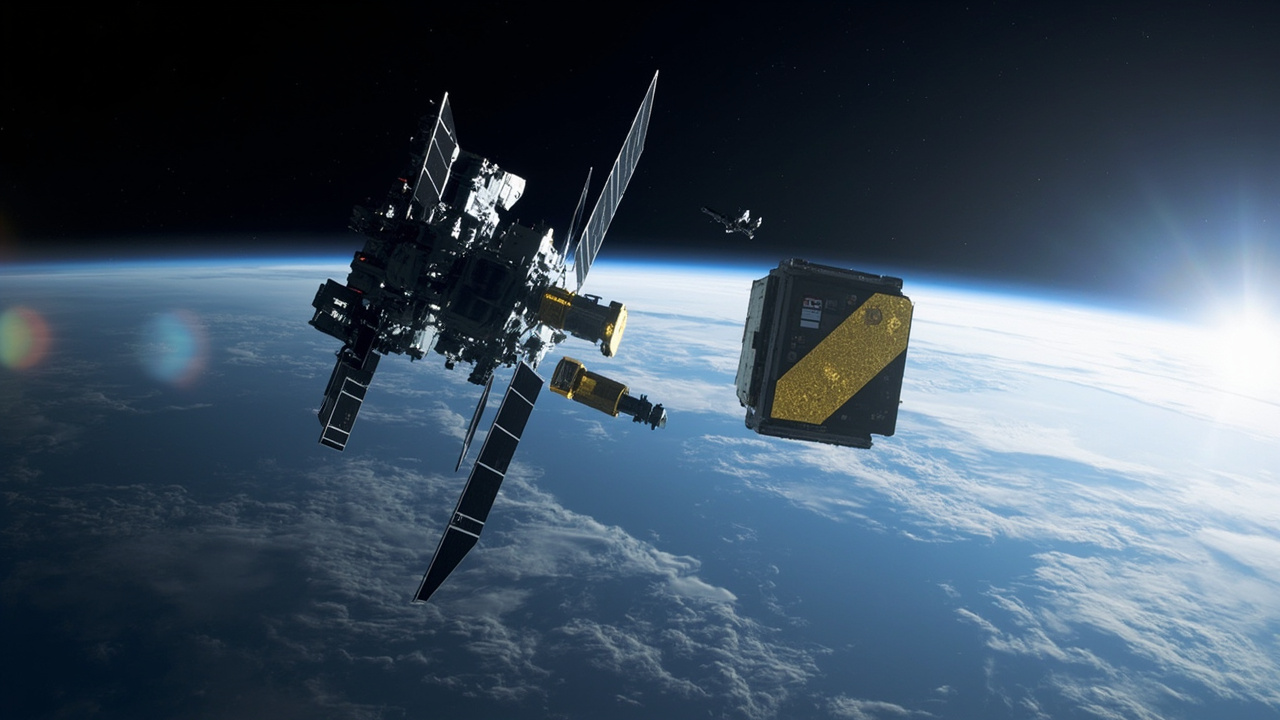
A private spacecraft built to lift NASA's sinking Swift Observatory reached within 15 kilometers (9 miles) of the telescope and photographed it, then withdrew because fuel reserves were too low to attempt a boost.
The rendezvous occurred on Tuesday, two weeks after the rescue attempt was abandoned, according to Rescue satellite gets close to NASA's doomed telescope, even if it can't save it. Katalyst Space Technologies, the company behind the three-armed robotic salvager, said Link used onboard sensors to collect data on Swift for NASA during the pass.
Katalyst Chief Executive Officer Ghonhee Lee told The Associated Press this week, “We got so close, but so far.”
The company said another close approach is unlikely because remaining propellant is insufficient. Link is instead exercising hardware and returning engineering measurements before atmospheric reentry within weeks.
The outcome leaves Swift on its descent path, with NASA expecting atmospheric plunge between October and the end of the year.
Close Approach Came After Rescue Was Called Off
Katalyst’s Link spacecraft approached to within 15 kilometers of Swift on Tuesday, after the planned orbit-boost rescue had been called off in August.
The spacecraft gathered sensor data on the observatory for NASA and captured images during the encounter, according to Rescue satellite gets close to NASA's doomed telescope, even if it can't save it.
The rescue effort had already ended because of Link’s own in-orbit difficulties. The company pursued the later rendezvous for practice relevant to future satellite-servicing missions.
NASA’s account places Link within 7.5 to 9 miles (12 to 15 kilometers) of Swift during recent operations, according to Commercial Spacecraft for NASA’s Swift Boost Continues Tech Demo.
The agency said Link will not make any closer approach to Swift during its remaining operations in orbit.
The report was updated to correct that the close approach happened Tuesday, not last weekend, based on updated information from Katalyst Space Technologies.
Spin Shortly After July Launch Consumed Lifesaving Fuel
Link entered an uncontrollable spin soon after rocketing toward Swift’s rescue in July.
Flight controllers slowed the tumble and stabilized the vehicle, a recovery that consumed precious fuel, according to Rescue satellite gets close to NASA's doomed telescope, even if it can't save it.
After stabilization, fuel remaining was insufficient to lift the aging Swift into a higher, longer-lasting orbit for continued cosmic observations.
NASA and Katalyst scaled back a mission that would have used LINK to boost the agency’s Neil Gehrels Swift Observatory to a higher altitude because of attitude control issues with LINK, according to Commercial Spacecraft for NASA’s Swift Boost Continues Tech Demo.
The mission originated in Cape Canaveral, Florida, where the private lifeline attempt for Swift was organized.
Both sides sought to avoid a collision that would unleash clouds of space debris.
Nine-Month Build Forced Parts Compromises
Lee attributed Link’s problems to the speed required to launch.
The mission was assembled in just nine months. Engineers often had to use whatever components were available instead of waiting for preferred parts, he said.
The compressed schedule was known from the outset. NASA paid the company $30 million to carry out the attempt, which was always going to be rushed.
Both NASA and Katalyst viewed the flight as an experiment with little to lose. No participant wanted an impact that would create additional orbital debris.
A photograph taken April 17, 2026, shows Kieran Wilson, LINK’s principal investigator, and Hunter Robertson, a space systems engineer, both at Katalyst Space, standing beside the spacecraft inside the SES, the Space Environment Simulator, at NASA’s Goddard Space Flight Center in Greenbelt, Maryland, ahead of thermal vacuum testing.
The image was credited to Sophia Roberts of NASA.
NASA Calls Flight the Right Kind of Risk
NASA Administrator Jared Isaacman addressed the result following Sunday’s launch of the Roman Space Telescope.
“Unfortunately, it wasn’t the outcome that we were expecting,” Isaacman said.
He added, “But that’s exactly the type of missions that we should be flying at NASA. We will learn from that.”
Isaacman said extending the life of a valuable spacecraft makes sense, especially when salvaging costs less than replacement.
He pointed to the Roman telescope as an example of design for future servicing. The Roman telescope was designed to be refueled even though it is headed toward an observation point 1 million miles (1.6 million kilometers) away.
The administrator’s remarks frame the $30 million Swift attempt as a lesson for commercial servicing rather than a completed rescue.
Swift’s Orbit Has Fallen to 208 Miles
Swift launched in 2004 to scan some of the biggest explosions in the universe.
As of Friday, its orbit had dropped to 208 miles (335 kilometers), barely half as high as when it began its cosmic survey.
Intense solar storms in recent years brought the telescope down much sooner than expected. Remaining orbital lifetime depends on how active the sun is.
NASA anticipates Swift will plunge through the atmosphere sometime between October and the end of the year.
The space agency resumed observations with the telescope last week after halting them early this year to conserve precious power.
The resumed science period gives researchers limited additional observing time before reentry.
Three Arms and Three Thrusters Tested in Final Weeks
Despite cancellation of the boost, Katalyst continues demonstrating as many of LINK’s capabilities in space as possible to collect data for future servicing technology and operations.
Over the past few days, Katalyst raised LINK’s orbit and adjusted its path to align with Swift’s orbit, according to Commercial Spacecraft for NASA’s Swift Boost Continues Tech Demo.
The team deployed all three of LINK’s robotic arms. Engineers also fired all three electric propulsion thrusters simultaneously.
An image captured by the spacecraft on August 30, 2026, shows LINK firing all three xenon-fueled thrusters at the same time.
A separate image captured by one of LINK’s cameras on August 24, 2026, shows a solar panel on the robotic servicing spacecraft in orbit.
The arms each measure 3 feet (1 meter). Lee said the spacecraft can continue exercising those arms and providing important data before reentry and burn-up.
Link Faces Burn-Up Within Weeks
Lee said another close approach to Swift is unlikely because fuel is low.
Link can continue operating its three 3-foot arms and returning engineering data before it reenters the atmosphere and burns up in the next few weeks, he said.
NASA’s Sept. 4 update estimated LINK will deorbit after another 2 to 3 weeks.
The Katalyst team raised LINK’s orbit during recent tests, then maneuvered to align with Swift’s orbital path for the distant pass.
The company does not plan a closer Swift approach during remaining operations.
Data from the arm deployments, thruster firings, sensor passes and orbit maneuvers are intended to inform future spacecraft servicing technology and operations.
Why Solar Activity Is Pulling Telescopes Down
Solar activity has increased atmospheric drag on low-orbit observatories.
Intense solar storms in recent years are responsible for Swift’s earlier-than-expected descent. The telescope’s altitude fell to 208 miles, about half its starting height for studies of powerful cosmic explosions.
The sun’s activity level will influence how much longer Swift remains aloft. NASA’s forecast window extends from October through year-end.
Like Swift’s, the Hubble Space Telescope’s orbit also has been lowered by solar activity.
The parallel effect on Hubble has drawn attention to servicing concepts that could maintain older observatories without replacement.
Hubble Could Be Next for Boost Concept
Katalyst is developing a next-generation spacecraft that could boost the 36-year-old Hubble into a longer-lasting orbit.
The Hubble vehicle would address altitude loss caused by the same solar-driven drag affecting Swift.
“Hubble does still have a few years of life yet, right? So the good news is this isn’t imminent,” Lee said.
The Swift flight provided practice for future satellite service calls. The company wanted the Tuesday pass partly to rehearse rendezvous procedures.
Servicing old telescopes and other satellites used to be “a very, very niche concept,” Lee added, “and we believe it’s going to become more and more commonplace.”
The statement reflects Katalyst’s focus on commercial life-extension work after the Swift boost was scaled back.
What the $30 Million Experiment Tested
The $30 million NASA-funded attempt tested rapid development, launch, stabilization, rendezvous and robotic operations.
The nine-month development required engineers to accept available hardware rather than wait for preferred parts. The July launch was followed by attitude-control trouble and fuel-intensive recovery.
The August decision ended boost plans. The subsequent September maneuvers tested orbit raising, orbital alignment, three-arm deployment and simultaneous firing of three xenon-fueled electric thrusters.
The Sept. 4 NASA Science update by Alise Fisher, published at 2:15 p.m., described the continuing work as a technology demonstration. The agency directed readers to monitor the Swift blog for more updates at its science portal.
Images from Aug. 24 and Aug. 30 documented the solar-panel configuration and thruster performance. Sensor data from within 12 to 15 kilometers supplied NASA with information about Swift during its final observing phase.
The Roman Space Telescope’s refuelable design shows NASA is incorporating servicing into new observatories bound for distant observation points.
What Happens Next for Swift Science
NASA resumed Swift observations last week after an earlier power-saving halt.
The telescope, launched in 2004, studies major cosmic explosions. Its current 335-kilometer orbit limits remaining time before atmospheric entry.
The forecast calls for plunge between October and year-end, dependent on solar behavior. Power conservation earlier this year was intended to preserve capability for this closing period.
Link’s sensor observations from 9 miles add a final external dataset on Swift’s condition. The servicing craft’s own reentry is expected first, within 2 to 3 weeks from the Sept. 4 assessment, followed by burn-up.
No further Link approach is planned. Katalyst’s next servicing design effort centers on a possible Hubble reboost while that observatory retains several years of orbital life.